
At a northern Minnesota tribal school, a highly structured reading program gets results
Reported byMPR NewsBy Olivia Chilkoti, Mathew Holding Eagle III
AI-assisted summary
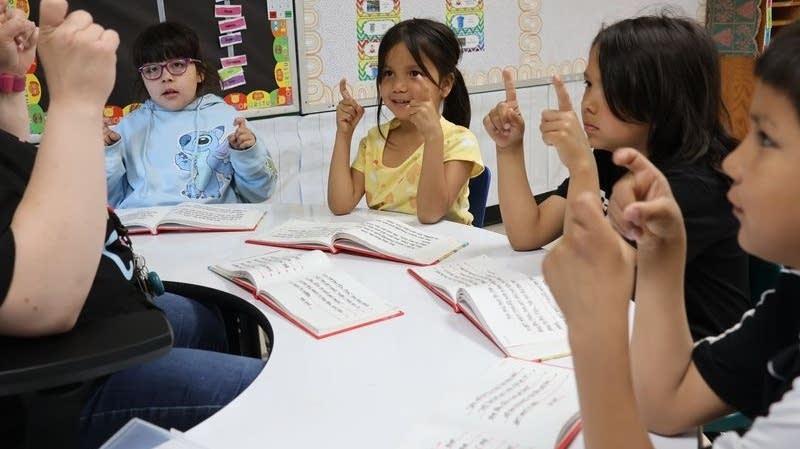
Bug-O-Nay-Ge-Shig School, a K-12 school of about 180 students on the Leech Lake Reservation in northern Minnesota, changed its reading approach after test scores fell during the pandemic. The superintendent, Dan McKeon, says the first post-pandemic senior class averaged a fifth-grade reading level, which created urgency for change. A University of Minnesota researcher suggested Direct Instruction, a highly structured method built on repetition, phonics and drills. After seeing data and demonstrations at a national conference, staff adopted it in August 2024, shortly before the school year began.
The article reports that after two years with the Reading Mastery program, students gained close to four years of progress on basic skills such as sounding out words. Students are grouped for reading by skill level rather than grade, and groups are flexible so children can move up. Teachers follow word-for-word scripts, correct errors right away and give positive feedback. A sixth grade and special education teacher says students who were three or four grade levels behind are now on grade level.
Some teachers have mixed feelings. One says the scripts are hard to follow rigidly and that a few students dislike the repetition, though she sees growth among struggling readers. The article says fewer than 200 U.S. schools use the method as their main reading program. Staff hope to add other teaching approaches over time, alongside Ojibwe language and cultural classes.
Why it matters
The article describes a school responding to pandemic-era reading declines with a method few schools use as their main program. It shows the tradeoffs between measurable gains and teacher concerns about scripted instruction, and how reading skills connect to a school's cultural goals.
- Literacy
- Test scores
- Instructional materials
- Special education services
Written with AI from the publisher's article and may contain errors. The original reporting is the authoritative source.
Sign in to react.
- How should a school weigh early reading gains against teacher concerns about scripted lessons when choosing a curriculum?
- What support might teachers and students need when a district switches reading programs shortly before a school year?
- How can a school build strong reading skills while also making room for cultural and language learning?
Suggested with AI.
Public discussion (0)
Share how this affects your community. Be respectful, stay on topic, and don't post personal information. Editors may hide comments that break these rules.