Arizona's Cave Creek Unified School District is adjusting how it runs its buses as diesel prices climb. The article cites AAA data showing the national average for diesel was $3.69 per gallon a year ago and $6.32 last week. It attributes the increase to the ongoing Iran war, which has disrupted supply chains and slowed traffic through the Strait of Hormuz, a key oil shipping route. The district's fleet supervisor says he orders about 7,000 gallons of diesel in a typical month for a 24-bus fleet. Buses usually refuel two or three times a week, and daily on longer routes toward the edges of the Phoenix area. In response, the district is combining routes where it can, tracking mileage by GPS, and using more gasoline-powered buses, which the supervisor says get roughly 14 miles per gallon versus about five for diesel buses. It is also stepping up maintenance, such as more frequent air filter changes, and has raised what it bills schools for field trips. The supervisor says all sports routes are still running, though some neighboring districts cannot say the same. A lead driver says higher fuel costs limit the district's ability to raise pay and attract drivers. A school business officials association executive says most Arizona districts are under similar pressure. He explains that districts typically draw on contingency funds first, then look for savings, and must stay within their legal budget authority, which could mean giving up other expenses.
AI-assisted from the publisher's article. It may contain errors.
Why it matters
Fuel costs can compete with other district spending, and the article says they may affect field trips, sports travel and driver pay. Families, staff and board members may want to understand how districts absorb price swings within fixed budgets.
AI-assisted from the publisher's article. It may contain errors.
Minnesota voters will decide this November on a constitutional amendment that would increase how much the state draws from the Permanent School Fund to boost per-student aid. The fund is a trust built from mining and timber revenue on land the federal government granted to the state in 1858. As of March 2025 it was valued at $2.3 billion. Schools receive payments from its investment income, generally about 2 to 2.5 percent of its value, while the principal cannot be spent under the state constitution. In fiscal year 2025, the fund produced a record $58 million for 329 school districts and 181 charter schools. That was about 0.4 percent of the biennial E-12 budget and roughly $68 per student. Anoka-Hennepin, the largest district, received $2.6 million, and Minneapolis received $2 million. If the amendment passes, annual distributions would rise to 4.5 percent of the fund's market value. The piece, published by the Center of the American Experiment, argues that the amendment debate has overlooked the state's finances. It notes the general fund has run a structural deficit each year since 2024, and that E-12 education and Health and Human Services make up over 70 percent of spending. The author contends the fund could cushion school cuts in 2027, but a higher payout could erode the principal over time, remove that reserve before the 2027 session, and delay spending reforms.
AI-assisted from the publisher's article. It may contain errors.
Why it matters
The vote could change how much trust-fund money reaches schools each year and how much remains for the future. Families, educators and lawmakers may weigh near-term aid against long-term fund health and the state's budget pressures, according to the article.
AI-assisted from the publisher's article. It may contain errors.
The Scarsdale School Board Nominating Committee (SBNC) is asking residents to run for open seats on the committee. The SBNC is a non-partisan group formed in 1965 that recruits, interviews and endorses candidates for the Scarsdale Board of Education. Its recommended candidates appear on the community ballot in May. The notice was written by the committee's election co-chairs. The committee has thirty members, drawn equally from the five elementary school neighborhoods. Members serve three years on the SBNC and then two years on the Administrative Committee. This year's open seats are one each from Edgewood and Fox Meadow, two from Quaker Ridge and three from Greenacres. Candidates must be qualified voters, meaning at least 18 years old and a Scarsdale resident for at least 30 days before the petition deadline. The notice says residents voted in 2024 to let non-citizens join the SBNC. To run, residents must complete two forms by 5 p.m. on October 23, 2026: a biographical form sent by email and a candidate petition submitted by mail or drop-off. The SBNC election is set for Wednesday, December 2, 2026, with snow dates of December 7 or 9. Voting will be at Scarsdale Middle School from 7 to 11 a.m. and 3 to 9 p.m. The article points readers to the SBNC website and an email contact for more information.
AI-assisted from the publisher's article. It may contain errors.
Why it matters
The SBNC helps determine which candidates are endorsed for the Scarsdale Board of Education, so who serves on it can influence the school board election. The notice describes the time commitment as limited and outlines who may take part, which matters to residents considering involvement.
AI-assisted from the publisher's article. It may contain errors.
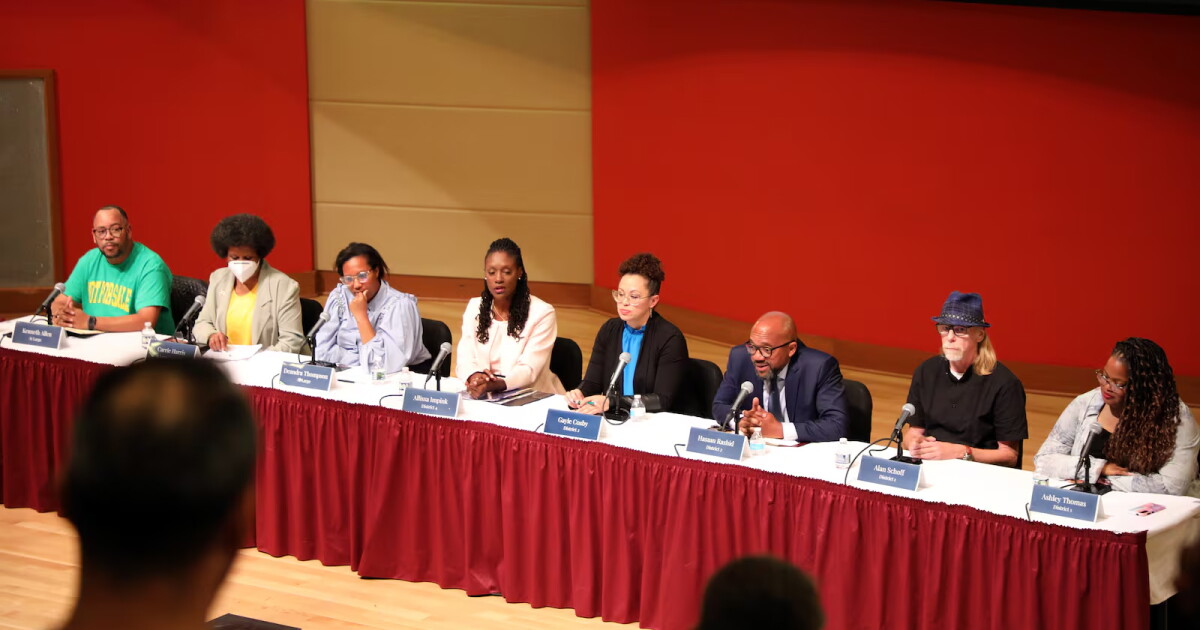
Indianapolis Public Schools voters will choose among fifteen candidates for five board seats this fall, and every current board member is on the ballot, according to WFYI. Chalkbeat Indiana and WFYI are co-hosting a candidate forum at 6 p.m. on Monday, Oct. 19, at the Central Library in Indianapolis. Moderators will pose questions, and audience members can also submit questions before and during the event. Readers can RSVP online to see which candidates plan to attend. The article says the winners will form a majority of the board, the first chosen since the Indianapolis Public Education Corporation (IPEC) was created. This year IPEC assumed several duties for IPS and the city's charter schools, including running facilities and student transportation and the power to place a tax question before voters. Board members still set district policy and goals, handle the budget, and hire and supervise the superintendent. This year candidates may list a party affiliation for the first time. The article reports that most IPS candidates are running as Democrats, unlike much of central Indiana and the state. School board races are not part of straight-ticket voting, and candidates from the same party can compete against one another. Early voting started Oct. 6 at the City-County Building, with more sites opening Oct. 24. Election Day is Nov. 3, with polls open from 6 a.m. to 6 p.m. at Marion County voting centers.
AI-assisted from the publisher's article. It may contain errors.
Why it matters
The election is the first since IPEC took over some responsibilities, so voters are choosing a board with a changed role. Families and staff can use the forum to hear candidates' views directly, and the partisan option adds a new element to a traditionally nonpartisan race.
AI-assisted from the publisher's article. It may contain errors.
Boone Community School District Superintendent Julie Trepa discussed the board's Monday, October 12 meetings on a local radio program. A work session on long-range facility planning was followed by a regular meeting. Trepa said prioritizing projects is time-consuming and that funding them is the hard part. The board also received updates on the west parking lot project, which she said is waiting on back-and-forth among the engineer, architect and contractor. For Franklin Elementary, the district plans HVAC work on the oldest part of the building, which she estimated at roughly $2.3 million. Bids will include alternates for fixing drainage in the playground area. She said funding would come partly from a levy tied to shared community spaces and partly from cash on hand. Trepa said enrollment is projected to fall by about 28 resident students and about 37 certified students. She noted the state will now average two count dates, October and January 15, to set funding. Other items included a shift to a different assessment for upper grades, a financial-learning program for fifth graders, a radon testing plan, and a contract to demolish an older building near the football practice field, including asbestos removal. She also said the district will take part in a national superintendents' association survey of community views of public schools. It is a short written survey, and results could arrive in December at the earliest. The next long-range facilities work session is October 27.
AI-assisted from the publisher's article. It may contain errors.
Why it matters
The discussion shows how the district is weighing building repairs, long-term facility plans and funding while enrollment dips and the state changes how it counts students. Families and taxpayers can also take part in a community survey about how the schools are perceived.
AI-assisted from the publisher's article. It may contain errors.
Oregon has released statewide assessment results (OSAS) for the 2025-26 school year. Compared with the prior year, the share of students scoring proficient rose statewide by 1.4 percentage points in math, 0.8 in English Language Arts (ELA) and 0.6 in science. Students in Lake Oswego, West Linn and Wilsonville score above the state average, but the article describes many local results as flat. In the West Linn-Wilsonville district, proficiency fell 1 point in math, rose 1.6 in ELA and fell 0.2 in science. In Lake Oswego, math fell 0.6 points, ELA fell 1.6 and science rose 1.2. Among younger students, Lake Oswego third-grade reading fell 1.5 points while third-grade math rose 1.5, and fifth-grade science fell 0.8. In West Linn-Wilsonville, third-grade reading and writing fell 0.4 points, third-grade math fell 5.6 and science results fell 1.4. Both districts remain below earlier levels: ELA scores were 10.2 points higher in Lake Oswego and 12.7 points higher in West Linn-Wilsonville in 2015-16. Lake Oswego's district says its test participation was below the 95% benchmark, at 93.6% in ELA, 93.2% in math and 92.2% in science, and that reaching it matters for state and federal requirements. West Linn-Wilsonville says it is carrying out a three-year action plan and treats OSAS as one data point among several.
AI-assisted from the publisher's article. It may contain errors.
Why it matters
Test results help families and educators see where students may need extra support, and they inform how districts direct instruction and resources. Participation rates also affect how accurately scores reflect a district's performance, which matters for board members reviewing results.
AI-assisted from the publisher's article. It may contain errors.
The Monroe Times published a piece promoting Wisconsin School Board Week, scheduled for Oct. 4-10. It encourages residents to recognize and thank their locally elected school board members for their work and public service. The article does not state the year. The piece draws on comments from leaders of the Wisconsin Association of School Boards (WASB). President Sandie Anderson says, in a message to members, that she has met committed board members across the state. Second Vice President Larry Dux says members regularly listen to the community and act as advocates for local public schools and students. The article also says Gov. Tony Evers issued a proclamation for the week that recognizes board members as advocates for public education and as partners in state efforts to give every child access to a quality education. According to the article, board members oversee budgets, evaluate superintendents and set the direction for their districts. It says more than 2,800 board members serve across 421 districts, are accountable to taxpayers, and spend time studying issues and taking part in professional development. WASB is described as a nonprofit that gives Wisconsin school boards information and services on school law, policymaking, bargaining, advocacy and leadership. The article presents the association's perspective.
AI-assisted from the publisher's article. It may contain errors.
Why it matters
School board members make decisions on budgets, superintendent evaluations and district direction that affect students, staff and taxpayers. The article highlights who holds those roles in Wisconsin and invites the public to engage with and acknowledge their local boards.
AI-assisted from the publisher's article. It may contain errors.
Talk of the Sound reports that in September 2025 the New Rochelle Board of Education set out a plan called Vision 2030 to shape the school district's long-term direction. The timeline called for an Idea Catalog that fall, at least three engagement events with 500 stakeholders in November and December, four to six priorities chosen by February 2026, and feasibility reports by June 2026. The outlet says it could not find the catalog or a public record of the engagement campaign. It also says 22 consecutive board agendas from November 2025 to September 2026 had no clearly labeled Vision 2030 item, though it notes that a missing agenda item does not prove no work happened elsewhere. After an October 2025 brainstorming session, trustees reportedly produced 31 ideas. In September 2026 the board presented four areas: reorganizing the two middle schools, changes to magnet and gifted programs, a therapy services center, and expanded career and technical education. The outlet says the presentation did not explain how these were chosen. The board president said no final decisions have been made. A revised schedule runs into July 2027, with priorities adopted in early 2027 and a final choice after feasibility studies. The outlet sent questions to the board on October 13; the article text ends before any response is described.
AI-assisted from the publisher's article. It may contain errors.
Why it matters
Proposals involving grade configuration, attendance zones and program locations could affect families, staff and taxpayers. The article raises questions about how the board documents its decisions and whether residents can shape priorities before options narrow.
AI-assisted from the publisher's article. It may contain errors.
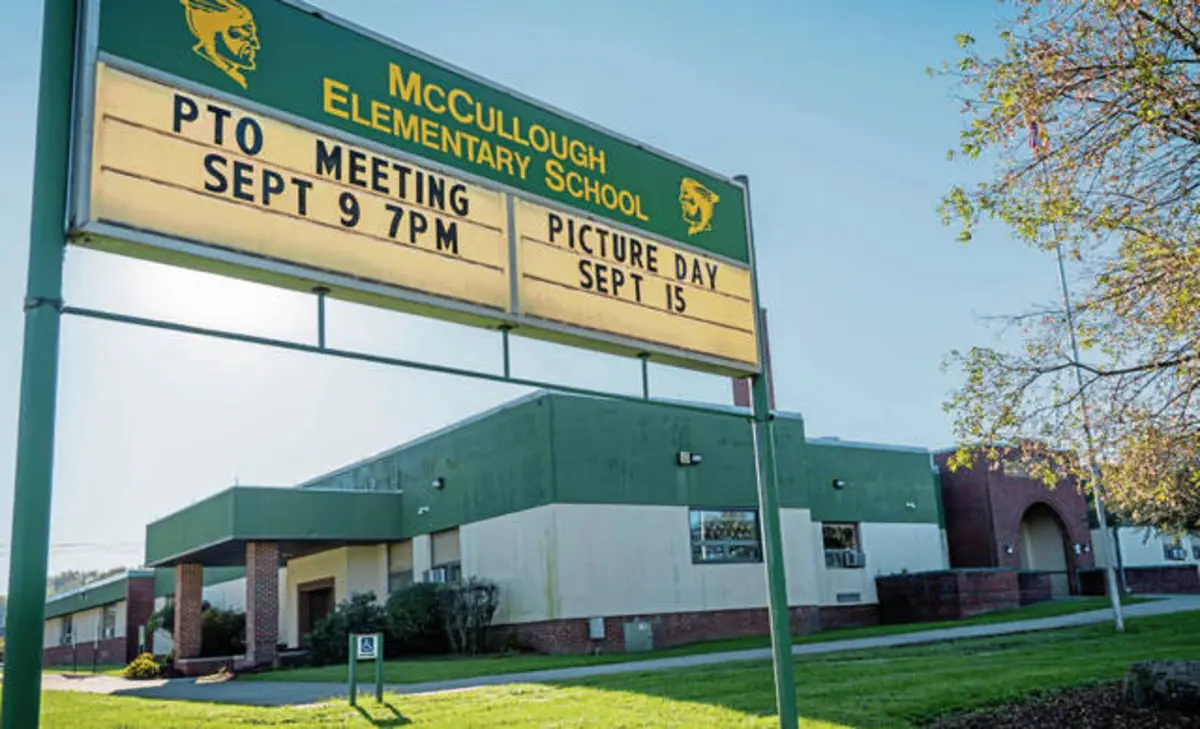
Penn-Trafford School District in Pennsylvania is weighing a consolidation plan that would close McCullough Elementary, its oldest building, which dates to 1924. Superintendent Matthew Harris presented two versions of the plan at an Oct. 5 board meeting. Both would close McCullough and change which grades are taught in the remaining buildings. Harris says the building was chosen because of its age and many facility needs. Administrators also say they weighed enrollment projections, capacity, transportation, staffing, and operating costs. District officials say the change could save about $1.3 million a year. However, the district's bus contractor, First Student, estimated that transportation costs could rise by about $539,000. District officials have not yet said what the new bus routes or ride times would be. The district says teachers from McCullough would be reassigned and it does not plan furloughs. It reports enrollment of 3,685, down 205 over five years, and savings that fell from $10.3 million in 2021 to $6 million in 2025 after several years of deficits. Several parents say the process feels rushed, and they want to know why only two options were offered. They also have questions about special education programs and bus rides. The board will take public feedback at 6:30 p.m. Oct. 19 at the high school, with a livestream. Speakers must register by noon Oct. 16.
AI-assisted from the publisher's article. It may contain errors.
Why it matters
A school closure and grade realignment could change class sizes, commutes, and school assignments for many families. It also shows how a district weighs projected savings against added transportation costs, falling enrollment, and aging buildings, while the public asks about process and timing.
AI-assisted from the publisher's article. It may contain errors.
Fayette County Public Schools posted a recap of the school board's October planning session. In the superintendent's report, Sara Pickering of Student Support Services described a new data tool the district is rolling out to follow its work on Positive Behavioral Interventions and Supports, known as PBIS. She said the information can be turned into action items, and she singled out one elementary, one middle and one high school for strong results. On finances, the Office of Financial Services said an initial unaudited annual financial report for fiscal 2026 has gone to the Kentucky Department of Education, but the district's final financial position for 2025-26 is not settled. The state agency gave the district an extra month for the audit, moving the deadline to Dec. 15. The consent agenda for the Oct. 26 action meeting has two items. One would approve a new associate director of Child Nutrition, a department with 465 employees. The job would be paid from the Child Nutrition Program rather than the general fund, with money budgeted for an empty administrative assistant job shifted to help cover the cost. The other would move leftover money from construction and renovation projects at nine sites to maintenance work at four other schools. The recap does not report any votes.
AI-assisted from the publisher's article. It may contain errors.
Why it matters
The items show how the district tracks student behavior supports, handles its audit timeline, and reassigns leftover construction money to maintenance. Families, staff and taxpayers can follow these decisions, and the article notes that public comment is welcome at board meetings.
AI-assisted from the publisher's article. It may contain errors.
The Watertown School Board is scheduled to hold first readings of six student-related policy updates at its regular meeting at 5:30 p.m. on Tuesday, October 13, 2026. The proposals cover nonresident open enrollment, tuition, international exchange students, credit transfers from non-accredited or home-school settings, truancy enforcement, and searches and police questioning on school property. Under the open enrollment policy (JFAB), nonresident applications for the first semester would be due before the last Friday in September, and the second-semester deadline is the last Friday in January. Exceptions exist for certain placements and special circumstances. Applications could be denied for students who are suspended or expelled or who have a controlled-substance conviction. Open enrollment could not push any classroom, building or program past capacity, and special education and self-contained behavior programs would close to open enrollment at 25 percent of capacity. Nonresident students without an approved application would pay daily tuition set at the state's student need rate (JFABA). The exchange student policy (JFABB) would let the board cap international enrollment, require English proficiency and limit participation to 11th and 12th graders. Other proposals would set interviews, testing and principal decisions for transfer credits (JG), name the truancy officer as the enforcer of attendance laws (JHB), and allow searches of student property on reasonable suspicion, with no expectation of privacy on district devices and networks (JIH). Police searches of personal property would generally require a warrant.
AI-assisted from the publisher's article. It may contain errors.
Why it matters
These policies would shape who can enroll in Watertown schools and when, how transferring and home-schooled students receive credit, and what privacy students have on campus and on district devices. Families and staff may want to review the details before the board takes up the first readings.
AI-assisted from the publisher's article. It may contain errors.
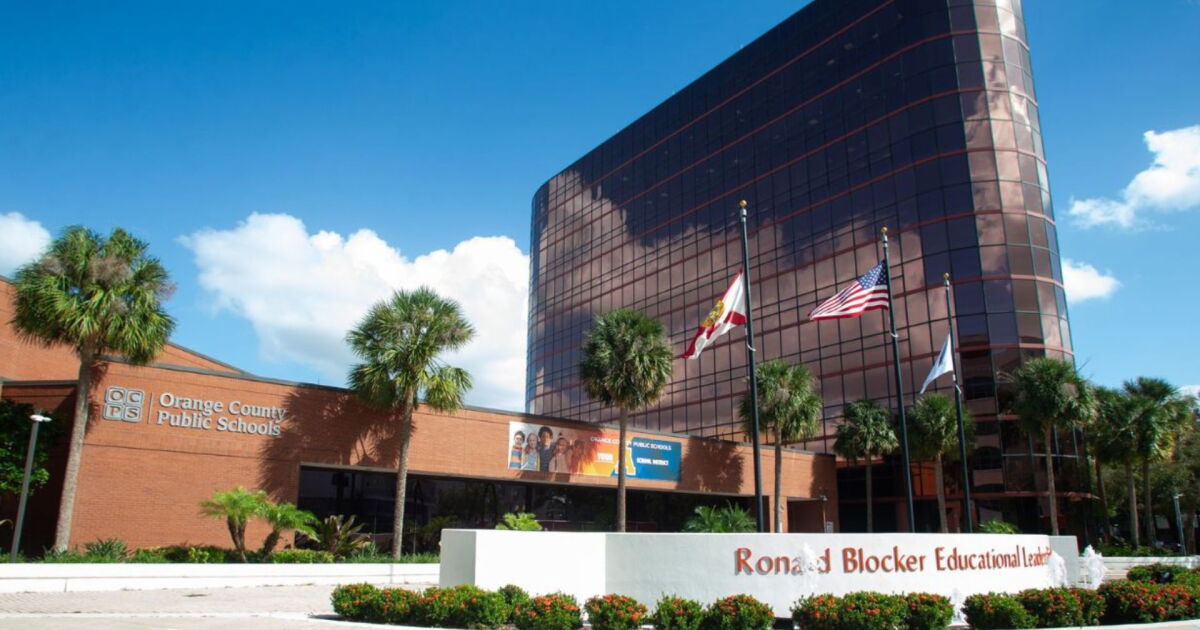
Enrollment in Orange County Public Schools is down by over eight thousand students compared with a year ago, according to district figures obtained by Central Florida Public Media. Students the district labels as immigrants make up the biggest share of that loss. Their count fell from 18,517 last October to 13,211 this October, a decrease of more than 5,300. Under the federal Every Student Succeeds Act, the label covers people ages 3 to 21 who were born abroad and have been in American schools for three full academic years or fewer. The district says the numbers are gathered for federal reporting and do not reveal any student's current immigration status. Over two years, the immigrant-classified group shrank by more than 6,300 from about 19,500, while total enrollment dropped by nearly 13,700. Venezuelan students in this group fell from 3,633 to 1,904, and Haitian students fell from 2,110 to 1,395. Temporary Protected Status ended for Venezuela on Oct. 2 and for Haiti on July 27. The article notes the data does not prove those changes caused the drops or show where students went. The leader of a local nonprofit, Fabiola Gomez, says she has heard some families left Florida or chose homeschooling, and she expects more departures.
AI-assisted from the publisher's article. It may contain errors.
Why it matters
Enrollment often affects school staffing, resources and planning, and families may be making major decisions amid federal immigration changes. The article also shows the district cannot yet say where these students went, which limits what the numbers explain.
AI-assisted from the publisher's article. It may contain errors.
Oregon is starting a new school accountability system this fall. All 197 school districts must track progress on student attendance, third grade reading and four-year graduation rates. Governor Tina Kotek proposed the plan and the legislature approved it. It includes escalating levels of coaching for districts that fall short and, potentially, state control over up to 25% of their state funding. The governor's office says it will link student outcomes, district expectations, state responsibility and support for struggling districts. OPB interviewed more than 20 education leaders, parents and advocates. Many said they doubt it will change much, arguing that the state has no unified vision and keeps shifting priorities. They point to practical gaps: students can opt out of the standardized tests used to measure growth, and the state does not enforce attendance laws. Oregon has tried several accountability systems over 25 years, and the state remains near the bottom nationally in math, reading and graduation rates. Over a third of students were chronically absent in 2024-25. A national parent advocacy official says the plan makes the metrics matter again. State education officials say they are moving away from a complaint-driven model and toward real-time monitoring. They piloted the approach with 34 districts last year. The article's text ends before it finishes describing that support.
AI-assisted from the publisher's article. It may contain errors.
Why it matters
The system could affect how districts are evaluated, coached and funded, and what supports families and staff see locally. The article shows that people disagree about whether the state can make it work, and that some districts are building their own plans.
AI-assisted from the publisher's article. It may contain errors.
Image: KDLL Public Radio for the Central Kenai Peninsula
What's happening
The Kenai Peninsula Borough School District has put together a patchwork arrangement to keep some swimming pools running after the school board removed pool funding earlier this year. The move saved more than $1.5 million. Five of the district's seven pools are open this school year through arrangements with community partners, and none receive general school funding, according to Superintendent Clayton Holland. The pools at the Ninilchik K-12 school and Soldotna High School are closed and drained. The Alaska School Activities Association gave permission for Soldotna's swim team to compete with Kenai Central's team. Each community has a different operating model. Students at Kenai, Skyview and Homer must pay $25, $35 or $45 per semester for physical education classes that use the pool, depending on how often they swim. Students in Seward and Seldovia pay nothing, which Holland says was a condition of the agreements with those communities. Only Homer's Tim Daugharty and Soldotna's Penny Vadla voted against the new fees. Daugharty criticized the plan, and Mica VanBuskirk said she worries it is not sustainable. Data from the first two months of the fiscal year show no remaining pool has raised enough to cover its estimated yearly costs. Some cities are contributing money, and the district is still working out how to divide those contributions. Holland expects costs to be covered through the end of this school year, but the board did not discuss a long-term plan much.
AI-assisted from the publisher's article. It may contain errors.
Why it matters
Families face new or higher pool fees that differ by community, and some students pay while others do not. Taxpayers and board members may want to follow whether the funding holds beyond this school year and what happens to pools that remain open.
AI-assisted from the publisher's article. It may contain errors.
The Caverna Independent Board of Education has a regular meeting set for Tuesday, Oct. 13, beginning at 5 p.m. at the district's central office in Cave City. The agenda lists several items for the board to take up, and the public will have a chance to speak during the session. One item asks whether the district should take part in the Kentucky Education Fund, which the article describes as a tax-credit scholarship program. The article notes that the agenda does not spell out what taking part would involve. The board will also look at change orders tied to construction work already underway, covering roof repairs, track upgrades and canopy work. In addition, members are slated to decide on accepting an offer of help through the Kentucky Education Technology Funding Program, which the article says supplies matching money so districts can buy and improve classroom technology. The board is also scheduled to go over the district's dyslexia policy and plan, which covers how students who struggle with reading are identified and supported. Superintendent Amanda Abell is expected to honor students and staff. Other agenda matters include financial reports, bus inspections, grants and fundraising by schools. The article does not report any votes or outcomes, since the meeting had not yet happened.
AI-assisted from the publisher's article. It may contain errors.
Why it matters
The agenda touches on scholarship participation, construction spending, technology funding and reading support for students, all of which can affect families and taxpayers in the district. The meeting includes public comment, so residents can raise views directly with the board.
AI-assisted from the publisher's article. It may contain errors.
A CapRadio report uses California's record with school district receivership to examine Sacramento City Unified, which has about 37,000 students and has spent a year under county oversight after certifying it could not balance its budget. A county fiscal adviser can overturn board decisions, and in August the state's school finance watchdog warned that cash could run out by spring 2027. The state's fiscal crisis team estimated the district would be $81 million short by June 2027. On July 30 the board approved a $158 million package of cuts and savings, and trustees said publicly that they oppose receivership. The article says receivership is not a state takeover, because the local board must vote to request emergency money, usually after the district cannot meet payroll. The Legislature and governor must then act. If a district needs more than double its required reserve, a county-appointed administrator replaces the board's and superintendent's decision-making. The article says Sac City's likely need would far exceed that threshold. The money is an advance on future state funding and carries interest. A law signed in September raised the maximum repayment period from 20 to 30 years. Across the 10 districts that have been through receivership, the article describes repeated administrator turnover, school closures, falling enrollment and budget trouble after leaving. In Plumas County, the newest case, an administrator cut 58 positions and regular bus routes ended, according to a teachers union leader.
AI-assisted from the publisher's article. It may contain errors.
Why it matters
Receivership would shift budget and school-closure decisions from elected trustees to an appointed administrator, and the money carries interest for decades. Families, staff and taxpayers in districts with deficits can see what the process has meant elsewhere.
AI-assisted from the publisher's article. It may contain errors.
Arizona Luminaria's voter guide previews the Nov. 3 general election for two seats on the Tucson Unified School District governing board. Five people are running: incumbents Jennifer Eckstrom and Val Romero, and challengers Pilar Acosta Ruiz, Skye Fernandez and Tre'Davon Rhodes. The article says the field includes an educator and a 20-year-old local high school graduate. The races are nonpartisan, so party labels do not appear on ballots. Key dates are Oct. 23 (last day to request a mail ballot), Oct. 27 (recommended mail-back date) and Nov. 3 (Election Day). The article describes major issues facing the board. The district says it plans to announce, before the election, which 10 schools it will close or consolidate over the next two years. The board says it will review data and gather community feedback, hold a public hearing Nov. 17 and vote Dec. 8. New members take office in January. State data project enrollment to fall about 4% to roughly 35,000 students. District officials attribute this to lower county birth rates and families using Empowerment Scholarship Accounts. The Arizona Auditor General's office also named the district among nine statewide at highest financial risk this year. Under state law, the State Board of Education can place an insolvent or grossly mismanaged district in receivership. Candidates told the outlet they are running because of these issues, to give back, to support their families and to act as community watchdogs. The guide draws on interviews, meeting transcripts and a Sept. 29 forum, though the provided text ends before the candidates' answers.
AI-assisted from the publisher's article. It may contain errors.
Why it matters
Voters will choose board members who take office in January, just after a scheduled December vote on closing and consolidating schools. The decisions affect families whose schools may change, staff, and taxpayers concerned about the district's financial standing.
AI-assisted from the publisher's article. It may contain errors.
The San Benito High School District board of trustees took two steps in September toward building a second campus. On Sept. 8, it approved swapping the 49.68-acre Pura Vida parcel for the 33.58-acre Thomas Orchard parcel, with the district also paying an extra $1.5 million for the smaller property. County planners had found that a school on the Thomas Orchard land would not match the land use designation in the county's General Plan, which guides growth in unincorporated areas. The article notes that school districts are not bound by local land use rules; instead, the state education department must approve a school's location and the state architect must approve construction. On Sept. 22, trustees unanimously passed two resolutions stating the district's intent to use eminent domain to acquire a third parcel next to the Borelli-Felice land it already owns. The district says it tried several times to negotiate. An Aug. 31 letter offered the Dotta Revocable Living Trust $1.4 million based on a 2023 appraisal, though the offer could change with an updated appraisal. The district has six months after adopting its resolution to file an eminent domain lawsuit in San Benito Superior Court. The article says all three parcels are zoned agricultural and were farmed. The district says a facilities committee of more than 60 people chose west Hollister because of expected growth. Voters rejected two $70 million bonds in 2024. The district says it still plans to use state grants and developer impact fees. It is also considering its Best Road site, owned since 1997, for 1,000 workforce housing units.
AI-assisted from the publisher's article. It may contain errors.
Why it matters
The decisions show how a district can advance a new school without local land use approval and how it plans to pay for one after voters turned down bonds. Taxpayers, nearby landowners and families may care about the cost, the use of eminent domain and the school's location.
AI-assisted from the publisher's article. It may contain errors.
Detroit voters will choose five school board members in the Nov. 3 election: four for four-year terms and one for a shorter two-year term. There are 34 names on the ballot, though three people have said they are no longer running. The winners will help determine what happens to small schools in Detroit Public Schools Community District. Each year the district publishes a list of small schools, meaning those where enrollment-based revenue falls short of what it costs to run programs and buildings. The current list has 19 schools. Some have shrinking enrollment, while others have unusual circumstances. Paul Robeson Malcolm X Academy, for example, lost students after it moved to another site while its building is replaced. The district's report says its funding should rebalance once it returns to the new building. Four schools from earlier lists have already shut down, and Thurgood Marshall Elementary-Middle School is slated to close when this school year ends. Superintendent Nikolai Vitti says that being listed does not mean a school is under consideration for closure. Chalkbeat sent candidates a questionnaire on the issue, and 19 responded. Many opposed closing more schools, and one said a costly school that meets students' needs should stay open. Others said the district should examine how schools got to this point and look for ways to keep them open. The individual candidate answers are not included in the text provided.
AI-assisted from the publisher's article. It may contain errors.
Why it matters
School closures affect where children attend class, where staff work, and how a district spends limited money. Board members elected in November will shape these decisions, so candidates' views may matter to families in affected neighborhoods.
AI-assisted from the publisher's article. It may contain errors.
Lincoln Elementary School marked its 100th anniversary with a centennial event on Oct. 11. Students, alumni, families and community members toured the renovated building, looked at student work, and gathered over cake. Principal Matt Lensan said the aim was to give former administrators, teachers, relatives and neighbors a way to reconnect with the school. Displays included yearbooks, class photos, time capsules and eight large quilts. The school began making a quilt each year in the late 1970s, and Lensan said each student gets to make a patch at some point, depending on when the next quilt is made. A former principal said the project taught embroidery and brought parents together. The school also still holds its February Pancake Day, honoring Abraham Lincoln's birthday. The building has been renovated several times. The latest work, in 2019, moved the gym and added a level, according to a third-grade teacher. A 1956 alumna, whose family has had three generations at the school, said supporters twice fought to keep it open and she hopes they will not have to again. The article says enrollment once lagged because few young families moved nearby, but student numbers have grown in recent years. Lensan said 20 languages are spoken in the building.
AI-assisted from the publisher's article. It may contain errors.
Why it matters
The story shows how a long-running neighborhood school's traditions, building upgrades and recent enrollment growth shape community ties. For families and board members, it also shows how past efforts to keep a school open can remain part of a community's memory.
AI-assisted from the publisher's article. It may contain errors.