This opinion piece from The Federalist argues that Fairfax County Public Schools in Virginia has handled falling enrollment poorly. The district counted 171,936 students as of Sept. 30, 2026, about 4,200 below the 176,133 projected in its fiscal 2027 budget. The author says it has lost roughly 17,000 students, about 9 percent, since fall 2019, and cites federal data showing enrollment drops in 40 states between 2019 and 2024. The author says the district balanced its roughly $4.1 billion operating budget by trimming a school staffing reserve this year, after raising class sizes last year through a staffing-formula change. The piece also says non-school-based positions grew 5.7 percent from fiscal 2022 to 2027, while school-based positions grew 3.3 percent. It points to records obtained through public records requests showing the superintendent's pay, 71 administrators earning over $200,000, paid conference travel for 15 administrators, and a district-sponsored doctoral program. The author also criticizes the board's $150 million vote for the new Skyview High School and cites state test failure rates, falling average SAT scores, and the number of schools flagged for federal support. The author concludes that districts should cut administration before increasing class sizes. This is the author's argument, not a district response.
AI-assisted from the publisher's article. It may contain errors.
Why it matters
Many districts are losing students while many costs stay fixed, so choices about where to cut affect class sizes, staffing, and taxpayer trust. This piece offers one critic's view of those tradeoffs, which readers can weigh against the district's own account.
AI-assisted from the publisher's article. It may contain errors.
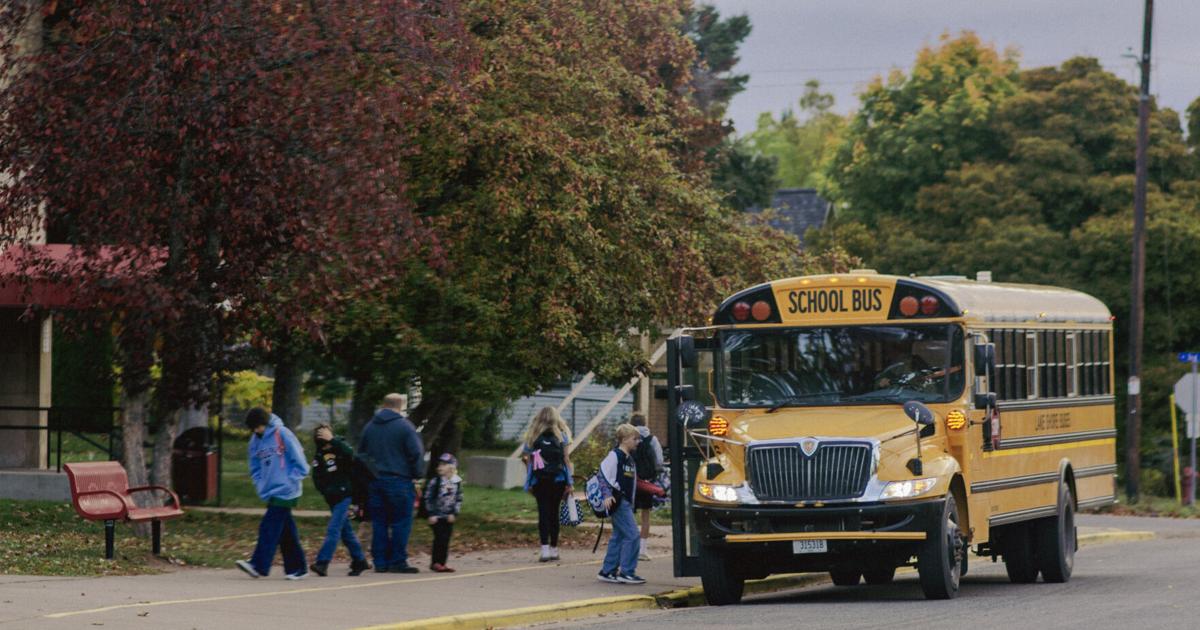
The School District of Washburn in Wisconsin will ask voters on Nov. 3 for permission to go past the state cap on how much revenue it can raise. It is one of 62 districts with such a request. The district wants $4.8 million over four years for day-to-day operations and upkeep. The amount would begin at $900,000 in the first year and increase annually until the final year, 2029-30, when it peaks at $1.5 million. For a $100,000 home, the district puts the first-year tax impact at around $123. Superintendent Denise Michaelsen says the district would collect less if the full amount proves unnecessary. The request comes after three years of reductions. The district went from five bus routes to four, and Michaelsen says some students now ride 20 to 25 minutes longer daily. Its 4K program dropped from five days weekly to three, and some retiring staff were not replaced. Michaelsen ties the need to state funding, noting that per-student revenue limits have lagged inflation since 2009 and that the aid formula treats the district as better able to pay as property values rise. Enrollment is down about 90 students since 2021-22. A building referendum approved in 2024 cannot be used for operating costs. If the measure fails, the district expects a shortfall near $700,000 this school year and says it would ask voters again in April. Further staff cuts would follow if that also fails, and the district's presentation lists larger classes and fewer elective, advanced and athletic offerings as possible results.
AI-assisted from the publisher's article. It may contain errors.
Why it matters
The outcome could shape bus rides, class sizes, program offerings and local property tax bills in Washburn. The article also shows how state funding rules and enrollment trends can push rural districts to seek local voter approval repeatedly.
AI-assisted from the publisher's article. It may contain errors.
The Texas Association of School Administrators (TASA), an Austin-based nonprofit, has named the Boerne Independent School District board of trustees its 2026 Outstanding School Board. The article describes it as the top honor in TASA's School Board Awards program and the first win for Boerne's board, which was a finalist once before, in 2003. A committee of Texas school administrators interviewed five finalists before choosing Boerne. The other four finalists were Alice ISD, Denver City ISD, Lovejoy ISD and Tomball ISD. According to TASA's release, the committee cited the board's team-focused culture and shared leadership, including the practice of rotating officer roles among trustees. It also pointed to the district's Citizen Leadership Academy, which helps prepare future board members, and to the trustees' advocacy for public education across the state. The committee chairman, a superintendent from a district that won in 2025, said all seven trustees travel to Austin on behalf of districts statewide. The committee also recognized the district's "Boerne Advantage," which emphasizes supporting every student. Superintendent Kristin Craft nominated the board and credited its members for training, collaboration and advocacy for the district and its staff. Board President Courtney Darter-Bruce said the community deserves credit for the award. Boerne ISD serves more than 11,200 students on 14 campuses across 380 square miles in Kendall County and parts of Bexar and Comal counties. TASA has given these honors since 1971.
AI-assisted from the publisher's article. It may contain errors.
Why it matters
The award shows how a statewide professional group evaluates school board practices such as shared leadership, training and developing future members. Families and board members elsewhere may find these practices useful when considering how their own boards operate.
AI-assisted from the publisher's article. It may contain errors.
The Bulloch County Board of Education met on October 8, 2026, and voted 7-0 to buy 500 more Chromebooks, on top of the 1,600 approved in May. The district's technology director said rising demand tied to artificial intelligence data centers is straining manufacturing and component supply, and he estimated the problem could last two to two and a half years. The superintendent recommended buying now rather than device by device later. The vendor had honored earlier pricing but could not guarantee it through fiscal year 2027. The principal of Julia P. Bryant Elementary reported that 61.2% of students were proficient or distinguished in science on the 2026 Georgia Milestones, up 19.9 percentage points from the prior year and above district and state averages. Math proficiency rose from 43% in 2022-23 to 54.5% in 2025-26. She credited teacher collaboration, targeted interventions and instructional changes, including restored daily science time and a differentiated reading approach. Of 610 students in kindergarten through fifth grade, 122 receive academic intervention. The board also recognized Statesboro High School students in national and international competitions, and a foundation announced more than $14,500 in grants for 11 teacher projects chosen from 43 applications. The consent agenda and personnel recommendations also passed 7-0. No one signed up to speak, and there was no executive session.
AI-assisted from the publisher's article. It may contain errors.
Why it matters
The Chromebook vote shows how global technology demand can affect district purchasing and budgets. The Bryant Elementary report gives families and board members a look at which instructional changes a school links to its reported gains in science and math.
AI-assisted from the publisher's article. It may contain errors.
An OPB report, republished by Jefferson Public Radio, examines why Oregon's education results have struggled to improve. More than 20 experts and advocates told the outlet the state's newest education plan faces the same problems as earlier efforts, including weak mandates, uneven guidance and opt-outs on key measures. They point to layered bureaucracy, partisan gridlock and a focus on short-term political wins. The article stresses Oregon's unusual setup: it is the only state where the governor also serves as superintendent of public instruction. The governor appoints the nine-member State Board of Education and the head of the education department. Some officials say this gives a governor useful clout, while a former policy advisor argues a governor has too many other demands. The governor's office says Gov. Tina Kotek is using every tool available, including two executive orders on cellphone policies and instructional time. Her opponent in the governor's race, state Sen. Christine Drazan, has pledged to replace the department director and state board members. The report also describes how statewide groups for teachers, administrators and school boards influence the legislature. Several opposed Senate Bill 1555, a school funding overhaul, saying it moved too fast, and it died in committee. Those groups say they back meaningful change but want funding attached to new requirements. The article compares Oregon with Washington, Rhode Island, Mississippi and Louisiana.
AI-assisted from the publisher's article. It may contain errors.
Why it matters
Oregon's education governance and funding decisions shape what schools can do for students. The article suggests who holds power, how funding rules are set and how long reforms last all affect families, school staff and taxpayers statewide.
AI-assisted from the publisher's article. It may contain errors.
What are the advantages and drawbacks of having a governor also serve as the state's top school official, compared with an elected or appointed superintendent?
New York Focus, a news outlet, tried to document how New York's school districts handle artificial intelligence. It built a tool that scanned the websites and board-document platforms of the state's 678 districts, then checked results by hand and contacted districts where no policy turned up. The outlet says this came shortly after New York City announced a one-year pause on student-facing generative AI through eighth grade. The analysis found that more than half of districts lack a formal, board-adopted AI policy. Roughly 270 have one, and most of those endorse responsible use to support teaching. Of about 400 districts with no policy found online, more than 70 confirmed they have none, and 39 of those said they plan to write one this school year. Some districts without a policy have internal guidelines, and some still use AI in classrooms. The article notes that board-adopted policies carry more authority and are generally easier to enforce. There are no statewide standards. Several districts told the outlet they are waiting for guidance from the State Education Department, which says it is developing it. Superintendents quoted want flexibility rather than bans. A state senator's bill introduced in August would require ed tech companies to register with the attorney general.
AI-assisted from the publisher's article. It may contain errors.
Why it matters
With no statewide rules, what students and teachers may do with AI depends largely on the district, and many districts have no official policy yet. Families, staff and board members may see very different rules and expectations from one district to the next.
AI-assisted from the publisher's article. It may contain errors.
The South Williamsport Area School Board approved a number of routine items at its monthly meeting on Monday night, according to the Williamsport Sun-Gazette. Among them was an Act 93 Compensation Plan that runs from July 1 through June 30, 2030. The board also held first readings of policies on a trauma-informed approach, school wellness, bullying and cyberbullying, maintenance, and the school calendar, and second readings of policies on academic standards, curriculum, virtual attendance, wellness checks, and health examinations and screenings. It approved a Signs of Suicide pilot program for 7th through 9th grade health class students. On financial matters, the board approved a change order from McKissick Architects for the Central Elementary Project. It is a $20,093 credit tied to changes in Phase 4A/4B and reductions to the main lobby. The board also accepted a service order with Effective School Solutions that brings $330,000 in grant funding from the Pennsylvania Department of Human Services for in-school mental health services. Other spending included $16,527.65 for wall padding, $4,142.36 for chairs and decals, $49,820 for baseball field renovations, and $39,600 for softball field renovations. On staffing, the board hired a full-time custodian at $15 per hour and approved advisors, mentors, winter coaches and volunteers with stipends from $220 to $6,172. It acknowledged two resignations: a 7th grade boys basketball coach and a Jr/Sr High School paraprofessional. The next meeting is at 6 p.m. on Monday, Nov. 2.
AI-assisted from the publisher's article. It may contain errors.
Why it matters
The votes show how a district directs grant money, building project costs, student mental health programming and staffing. Families and taxpayers can see what is being spent, and which policies are advancing toward final adoption.
AI-assisted from the publisher's article. It may contain errors.
The Watertown School Board voted unanimously on October 13, 2026, to approve the district's annual financial report for the 2025-26 fiscal year, which ended June 30, 2026. Business Manager Heidi Clausen presented the audited figures. According to the article, the South Dakota Department of Education had already accepted and reviewed them. Vice President Kari Lohr made the motion and Board Member Jean Moulton seconded it. The General Fund took in about $29.73 million and spent about $29.81 million, a shortfall of $81,457. It ended the year with a balance of $6,828,930, which Clausen said equals 22.91 percent of annual spending and stays within the board's target reserve. The Capital Outlay Fund dropped by $2,108,824 to $2,794,644 after $10.8 million in spending against $8.69 million in revenue. Clausen attributed this mainly to construction of the Allen Mitchell Athletic Complex and air-conditioning projects at elementary schools, and said it fits the district's five-year capital plan. The Special Education Fund fell by $745,631 to $2,214,163, a reserve of 23.17 percent of its spending. Lake Area Technical College's fund grew by $2,506,330 to $8,890,631. The district also oversees about $30.2 million in custodial and internal service funds, including $3,918,249 in employee health insurance trust assets and $26.3 million in college financial aid accounts. The full report is available on the district's website.
AI-assisted from the publisher's article. It may contain errors.
Why it matters
The report shows how the district's reserves and major projects stand after the fiscal year, which matters to taxpayers and families who want to know how public money was spent. It also gives board members a baseline for future budget and capital planning.
AI-assisted from the publisher's article. It may contain errors.
Eighth-grade math results at Belen Soto Elementary School have more than doubled over four years, rising from roughly 39% of students proficient on the state assessment to above 80%, according to a presentation to the Litchfield Elementary School District governing board on Oct. 13. English language arts results also improved, reaching nearly 89% proficiency in 2024-25. School staff credit a flexible intervention block called WIN, short for "What I Need." Under this approach, students are placed in groups based on what they currently need, and teachers move them between groups as they progress. Some work on foundational skills, some on grade-level material, and others on enrichment. Teachers from every subject help during math time and then switch to reading and writing support. Students who have mastered the material get harder concepts and projects instead of extra practice. Principal Courtney Frazier said more than 31% of eighth-graders scored in the top category on the state math test in each of the last two years. The team has shared its methods at a September conference and with staff at another district school. Board member Kimberly Moran cautioned that the gains should not be assumed to come from the model alone, noting that other factors may not carry over to other campuses. Frazier agreed that teacher expertise, teamwork and relationships also play a role. The school is piloting a math tool called Magma Math and a reading intervention program called Rewards. The district has not announced a formal expansion of WIN, though board members supported sharing the practices.
AI-assisted from the publisher's article. It may contain errors.
Why it matters
The report shows one school's strategy for raising math and reading results and how a board weighed it. Families and educators can see what is being tried, and board members can see the debate over whether results at one school can be repeated elsewhere.
AI-assisted from the publisher's article. It may contain errors.
Minnesota voters will weigh in on a proposed constitutional amendment on Tuesday, Nov. 3, 2026, that would alter the way the state's Permanent School Fund pays money out to public schools. According to the Winona Area Public Schools website, the change is meant to boost school funding drawn from this existing fund, and it would not require higher individual income or property taxes. If voters approve it, the new rules would start on July 1, 2027. The fund dates to Minnesota's statehood in 1858. Income from school trust lands, such as timber, mining and land leases, is invested to support public education over the long term. Districts statewide, including Winona, already receive money from it. At present, payouts are tied to the interest and dividends the fund earns. Under the amendment, the annual payout would instead equal 4.5% of the fund's average value across the previous three fiscal years. The district says this approach would let payouts capture a larger share of investment gains. The amendment would also direct that the fund be managed to keep its buying power intact and to weigh the interests of present and future students. The district estimates it would get roughly $70,000 more, though the real figure would hinge on the fund's value and the district's enrollment. The money could go toward staff, instructional materials and school operations. The district notes this question is separate from its Capital Projects Levy renewal, and voters will decide each one on its own.
AI-assisted from the publisher's article. It may contain errors.
Why it matters
The amendment could shift how much state trust-fund money reaches schools without a tax increase, which may matter to families, staff and taxpayers. Board members may also want to understand how the estimated extra funding could vary with the fund's value and enrollment.
AI-assisted from the publisher's article. It may contain errors.
How should a district weigh an estimated but uncertain funding increase, such as one that depends on enrollment and fund value, when planning its budget?
The Wawasee Community School Corp. board approved a roughly $48.3 million spending plan for 2027 at its Oct. 13 meeting. The district's chief financial officer, Brandon Penrod, said the plan includes an operations levy ceiling of $9.27 million, but that property tax caps and credits are expected to trim collections by close to $600,000. As a result, operating revenue stays mostly level even though costs are rising. Final tax rates will be set after state review, and the district could lower its advertised debt-service levy at that point. Trustees also adopted a 2027-29 capital projects plan and a 2027-31 bus replacement plan, which Penrod said does not commit the district to replacing every listed bus. They also passed preliminary resolutions for a possible $1.5 million bond, with a six-year maximum repayment term and a 7% interest cap. Penrod described those as upper limits, and more steps would be needed before any bonds are issued. Assistant Superintendent Michelle Walden reviewed spring 2026 ILEARN results for grades three to eight. In reading and writing, under half of third and fourth graders reached proficiency, and middle school results fell well below state averages. In math, 54% of third and fourth graders reached proficiency, above state averages, though scores dropped in later grades. Walden pointed to revised state standards and scoring thresholds, which complicate comparisons with earlier years, and to new English curricula. She said most students who fell short were rated as approaching proficiency. Superintendent Kent Myers said a new state accountability grade is expected in November. During public comment, resident Curt Hursey asked again whether board work sessions will continue and requested a detailed accounting of the middle school pool project. Myers promised an answer in November, along with a public presentation by pool contractors. He said the project remains under the $8.5 million figure Hursey cited. The board meets next on Nov. 10.
AI-assisted from the publisher's article. It may contain errors.
Why it matters
The budget shows how tax caps can leave a district's operating revenue flat while costs rise. The test results and the pool project questions also show what the board is being asked to explain to taxpayers and families about academics and spending.
AI-assisted from the publisher's article. It may contain errors.
Mars Area School District and area law enforcement responded after a bomb threat written on a bathroom wall was found at Mars Area High School on Tuesday, Oct. 13. According to a message the superintendent, Mark Gross, sent to parents, the threat referred to Friday, Oct. 16. He says the district immediately contacted the Adams Township Police Department. The article reports that police, other law enforcement personnel and bomb-sniffing dogs searched the building in the afternoon, and that seven bomb squads took part in a complete sweep. Gross says no device was found and police officials judged the building safe. He told the reporter the district took the threat very seriously. After-school activities at the high school were moved to the middle school, while evening activities at the high school stayed on schedule. Following a school board meeting that night, Gross said the school would largely return to normal operations the next day. The district says additional security measures, including more building sweeps, will continue through the rest of the week, and more information will be shared as it becomes available. The article notes this is the second threat in several weeks to affect the district, after a Sept. 30 swatting incident that led many Butler County districts to briefly lock down.
AI-assisted from the publisher's article. It may contain errors.
Why it matters
Threats like this affect whether families feel students are safe at school and how districts balance normal operations with security steps. The article shows how a district communicated with parents, worked with police and adjusted activities after a threat.
AI-assisted from the publisher's article. It may contain errors.
The Santa Rosa County School Board voted 5-0 on Oct. 13 to delay reopening schools until Oct. 19. That replaces an earlier plan to bring students back Oct. 14. Board member Linda Sanborn made the motion after many parents and teachers urged more time following Hurricane Isaias, which the article says hit Destin as a Category 2 storm. The district had announced the day before that schools would reopen that week, after a directive from the governor's office and the state Department of Education that Panhandle schools reopen by midweek. Superintendent Karen Barber said the situation was more complicated than it first seemed and thanked the state for its help. The board's attorney, Terry Harmon, told members that the board, not the state, has the final say on when students return. Speakers described homes without power, running water or air conditioning, roads narrowed by debris, and teachers who had no lesson plans ready. A district map marked schools without power in red. As of midday Tuesday, Milton High, Avalon Middle and Bennett C. Russell Elementary were still without power, and Jay Elementary was drying out after water seeped in. Barber said schools lacking power or water would not open. Parent advocate Kyle Connolly welcomed the vote as a chance for families to recover, while Sanborn called it the right decision.
AI-assisted from the publisher's article. It may contain errors.
Why it matters
The vote shows how a local board weighed a state directive against conditions in the community after a storm. Families and staff dealing with outages and damage gained five more days before students return, and board members were reminded of their authority over reopening.
AI-assisted from the publisher's article. It may contain errors.
A state-appointed body, the nine-member Educational Oversight Board, is preparing to assume authority over Memphis-Shelby County Schools, Tennessee's biggest district. At an Oct. 8 meeting it unanimously adopted a process for approving contracts and spending, and it also took some organizational and staffing steps. Days earlier, a federal judge signaled that a court hold on the takeover would end after the board tells him it is fully prepared to do the job, according to reporting the article cites. The takeover is not final. The district and Shelby County are contesting the state law in court, including a separate suit filed Oct. 7 in Chancery Court. They argue the law strips power from locally elected officials. Under the law, the board would have the last word on contracts above $50,000, the yearly budget and charter school applications. The article links the arrangement to a state-ordered forensic audit released in July, which found weak governance, purchasing and internal controls. Auditors flagged over $54 million in 2021 through 2024 spending as potential fraud, waste or abuse, which is not a criminal finding. Much of it involved a custodial contract. The district also faces an estimated $1.6 billion in building needs over ten years, a decline of over 9% in enrollment across a decade, and possible closures of up to 10 more schools, per the superintendent.
AI-assisted from the publisher's article. It may contain errors.
Why it matters
A shift in who approves budgets, contracts, charter applications and building decisions could affect how Memphis schools are run, funded and possibly closed. Families, staff and taxpayers may see decisions move from the elected school board to a state-appointed one, while the court fight continues.
AI-assisted from the publisher's article. It may contain errors.
The Green Bay Area Public School District has put forward a proposed budget that the district's chief financial officer, Angie Roble, describes as a balancing act between rising expenses and serving more than 17,000 students. The district expects its mill rate to fall from $7.41 to $7.07, even though the plan includes a 1.22% increase in the tax levy. Roble says that increase is well below the one in the prior budget, which she recalls as above 5%. The article notes that the effect on an individual's property taxes depends on the estimated fair market value of the home. After several years of school consolidations, the district has cut staffing by more than 100 full-time positions, and Roble says overall salary spending is down 1.65%. She says the goal is to match staffing to declining enrollment. On special education, the state budget promises to cover 45% of costs this year, but last year's payment fell short of what was expected. The district anticipates a similar shortfall and built its plan around that assumption. The district is also preparing a four-year operating referendum request for voters. Roble says that if voters reject it in November, the district would ask again in April, and that could mean more consolidations, layoffs or program cuts. Trustee Laura McCoy says the district has no choice but to return to voters so soon after a referendum two years ago. The school board votes on the budget proposal Oct. 26, and the community votes on the referendum Nov. 3.
AI-assisted from the publisher's article. It may contain errors.
Why it matters
The budget and referendum shape what Green Bay taxpayers pay and which staffing and programs the district can keep. Families and employees could see further consolidations, layoffs or program cuts if voters decline the referendum, according to the district's finance chief.
AI-assisted from the publisher's article. It may contain errors.