Moms for Liberty introduced an artificial intelligence tool called M4L AWARE at its national summit in Dallas on October 9. The group says the software will track school board agendas in roughly 13,000 districts and notify parents ahead of votes on policies the organization views as threats to parental rights. CEO and co-founder Tina Descovich presented it. The name stands for Agenda Watch, Alert, Respond, Engage. Descovich said the tool already scans agendas, sorts items into categories and flags issues. She said it scores them on a scale of one to 10 and sends results to members' email inboxes and to the national team. The group plans to look for districts considering diversity, equity and inclusion policies, critical race theory, gender identity policies, tax increases, and measures it believes infringe on parental rights or First Amendment protections. It will also identify districts whose policies match its priorities. Descovich warned that when the group finds violations of parental rights, it will crowd board meetings and file lawsuits. The article notes that the announcement gave no accuracy-test results, no explanation of how late or incomplete agendas are handled, and no detail on how ratings are reviewed. A spokesperson told Vanity Fair the tool links members to the original policy documents so they can examine them before votes. The article also describes the group's involvement in Texas debates over social studies standards, but says this does not show the tool played a role in them.
AI-assisted from the publisher's article. It may contain errors.
Why it matters
Automated monitoring and scoring of board agendas could change how organized groups learn about and respond to local decisions. Board members and families may see more advance attention and turnout at meetings, while questions remain about how accurate and consistent the ratings are.
AI-assisted from the publisher's article. It may contain errors.
Keller Independent School District voters will decide on November 3 whether to approve five bond propositions totaling $828 million in principal. Counting interest, the article puts the cost at $1,476,513,794. The school board called the election in August, acting on recommendations from a Citizens Bond Advisory Committee. Early voting begins October 19. Proposition A, at $756.3 million, covers maintenance, repairs and renovations at 34 campuses and facilities, plus an estimated $621.9 million in interest that the ballot language does not mention. The district website lists project types such as roofing, HVAC, plumbing and safety systems, along with a partial rebuild of Keller Middle School, but gives no breakdown of the money. The other propositions are B ($28 million for student and staff devices), C ($8.8 million for natatorium repairs), D ($11 million for athletic complex and field house work) and E ($23.9 million for artificial turf at middle schools and some high school fields). The district says using bonds for maintenance could ease pressure on its operating fund. The district's existing debt is $861,943,637 with interest, and the article says total debt would pass $2.3 billion if all five propositions pass. Enrollment is falling and a campus consolidation is underway. Some Facebook commenters raised cost concerns and criticized the 2019 bond. A pro-bond committee received a $20,000 donation from an executive at a construction firm.
AI-assisted from the publisher's article. It may contain errors.
Why it matters
Voters are being asked to take on substantial long-term debt while enrollment falls, so families and taxpayers will be weighing both facility needs and total repayment cost. The article also highlights how ballot wording and the district's published project detail shape what voters know.
AI-assisted from the publisher's article. It may contain errors.
Eight candidates are running for four seats on the Stillwater Area Public Schools board of education in the election on Nov. 3. Three incumbents, Alison Sherman, Pete Kelzenberg and Chris Lauer, are seeking reelection, and five newcomers are challenging them. The board's vice-chair originally ran too but suspended his campaign in late August. His name still appears on the ballot. The Stillwater Gazette sent every candidate a questionnaire asking about the district's most pressing issues and how to keep a balanced budget while encouraging growth. In the responses included here, finances come up often. Several candidates say state funding does not cover mandates and special education costs, and that state and federal support is declining. A candidate who identifies as board chair says roughly 60% of the district's funding comes from the state and describes a new community financial advisory group. Many answers call for more transparency and for involving students, families and staff in decisions. Some candidates propose multi-year financial planning, efforts to attract and keep students, or advocacy at the state level. Others raise student mental health, school safety, or the number of recent changes, such as schedule and bus changes and new buildings. The text provided ends partway through one candidate's response, so the full article has the complete set of answers.
AI-assisted from the publisher's article. It may contain errors.
Why it matters
Voters will fill four of the seats that oversee the district's budget and priorities while funding is under pressure. Candidates' own answers about finances, communication and growth let families, staff and taxpayers compare their approaches before Election Day.
AI-assisted from the publisher's article. It may contain errors.
Everett Public Schools in Washington state has settled a dispute with LifeWise Academy, a Christian nonprofit that runs off-campus religious instruction for public school students during the school day. Under the agreement, the district revised its rules covering religious activity, arranged religious liberty training for its board members, and covered $275,000 of the group's attorney fees. The district's board and superintendent also issued a public apology posted on the district website. In that statement, the district acknowledged that its policies made things hard for participating students and families, especially around how students were released for instruction and how materials from LifeWise were handled. Board members also apologized for remarks made at meetings about the program, calling them hurtful to families. The district said it intends to apply its policies neutrally and consistently. LifeWise had filed suit, alleging the district kept it out of community resource fairs and blocked it from posting flyers where nonreligious groups were allowed. In April, a federal judge in the Western District of Washington partly granted a preliminary injunction, a temporary order that limits certain actions while a case continues. The judge wrote that the district engaged in viewpoint discrimination. LifeWise's lawyers at First Liberty Institute and its CEO called the settlement a victory. The article does not describe any further steps.
AI-assisted from the publisher's article. It may contain errors.
Why it matters
The settlement shows how a district's handling of outside religious programs can lead to litigation, mandated training and legal costs. Taxpayers, families and board members may want to understand how access rules for outside groups are applied evenly.
AI-assisted from the publisher's article. It may contain errors.
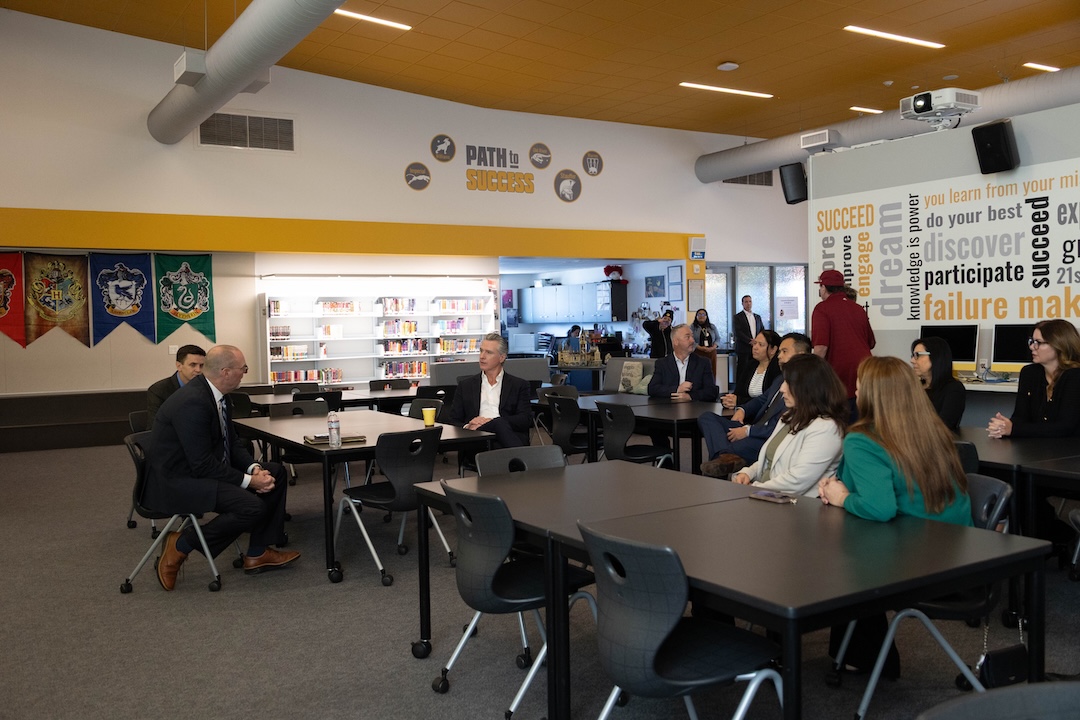
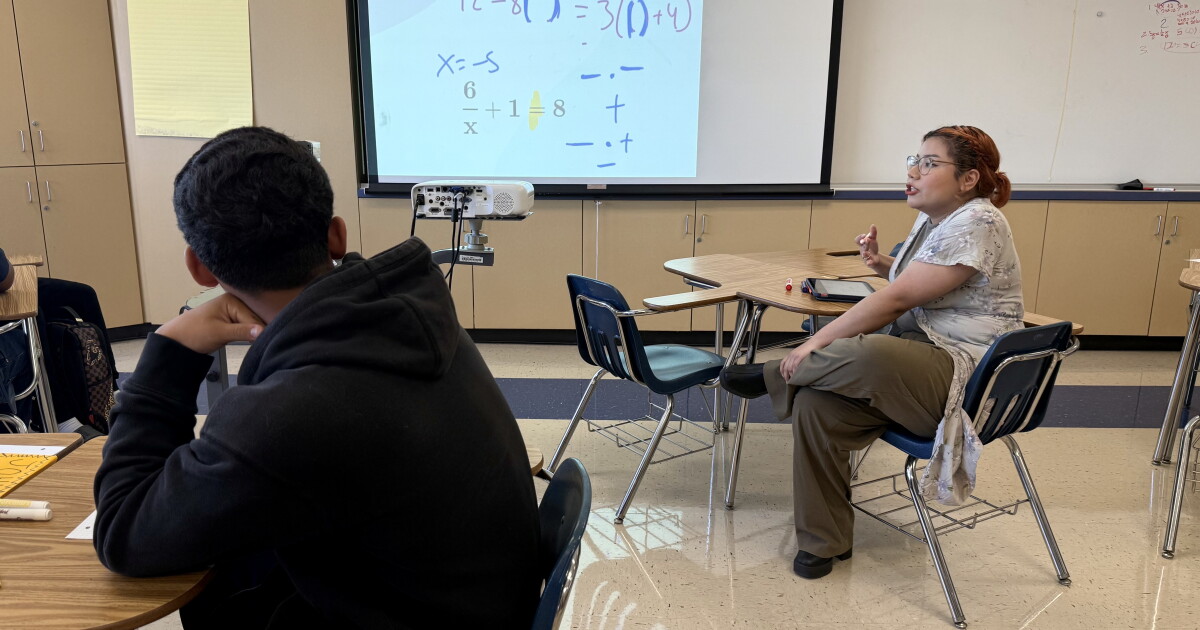
Gov. Gavin Newsom announced statewide results for the 2025-2026 school year at a middle school in Downey. This is a state press release, and it says California students improved in English language arts, math and science for a third straight year. It also reports that chronic absenteeism fell across all grade levels and that suspension rates are at their lowest since 2019, excluding the pandemic years. The state says 71% of students scored Developing, Proficient or Advanced in English, 61.8% in math and 86.5% in science. It says science results are above pre-pandemic levels. According to the release, Black, Hispanic or Latino, low-income and homeless students posted gains that matched or exceeded the statewide average in several subjects. State Superintendent Tony Thurmond and State Board of Education President Linda Darling-Hammond both said progress is encouraging but more work remains. The release highlights three districts. Downey Unified, Exeter Unified and Union Elementary each saw gains of at least 1.5 percentage points in the share of students at Proficient or Advanced in all three subjects. Each superintendent credited a mix of data use, literacy work and student supports. The state also points to $151.4 billion in TK-12 funding in the 2026 Budget Act, a $2.4 billion special education increase, and a community schools program set to expand to 3,700 more sites.
AI-assisted from the publisher's article. It may contain errors.
Why it matters
The results give families, educators and board members a statewide look at achievement, attendance and discipline, along with the programs and funding the state credits. Because the source is a state government release, readers may want to compare it with local data and independent analysis.
AI-assisted from the publisher's article. It may contain errors.
Florida Education Commissioner Henry Mack used a Board of Education meeting to defend the department's rewrite of the state's K-12 science standards, which have not been updated since 2008. The proposed standards are in a public review period, and the department has held discussions in Walton County, Hillsborough County and online on Sept. 30. The article says the state board is expected to vote on the standards in December. Mack said the aim is clear, rigorous standards rooted in the scientific method and free of ideology. He also said he wants to avoid "scientism" and the notion that science is always settled. He rejected claims that evolution or climate science is being removed, saying both appear in the standards, including sea level rise. He invited the public to a listening session on Oct. 27 from 5:30 to 7:30 p.m. at Lake Buena Vista High School in Orange County. Critics have objected. The National Center for Science Education opposes the proposal, and its deputy director said it falls short on climate change and evolution and leans on trivia over depth. According to a Sentinel report, many commenters at an earlier event called the standards vague on those topics. The Florida Education Association said the revision should follow research and evidence, and argued that a document of over 1,000 pages needs more review time and additional virtual town halls. Board member Grazie Pozo Christie voiced support for Mack's approach.
AI-assisted from the publisher's article. It may contain errors.
Why it matters
State science standards shape what students are taught in classrooms across Florida. Families and educators have a limited window to comment before the expected December vote, and critics and the department disagree about how the standards treat climate change and evolution.
AI-assisted from the publisher's article. It may contain errors.
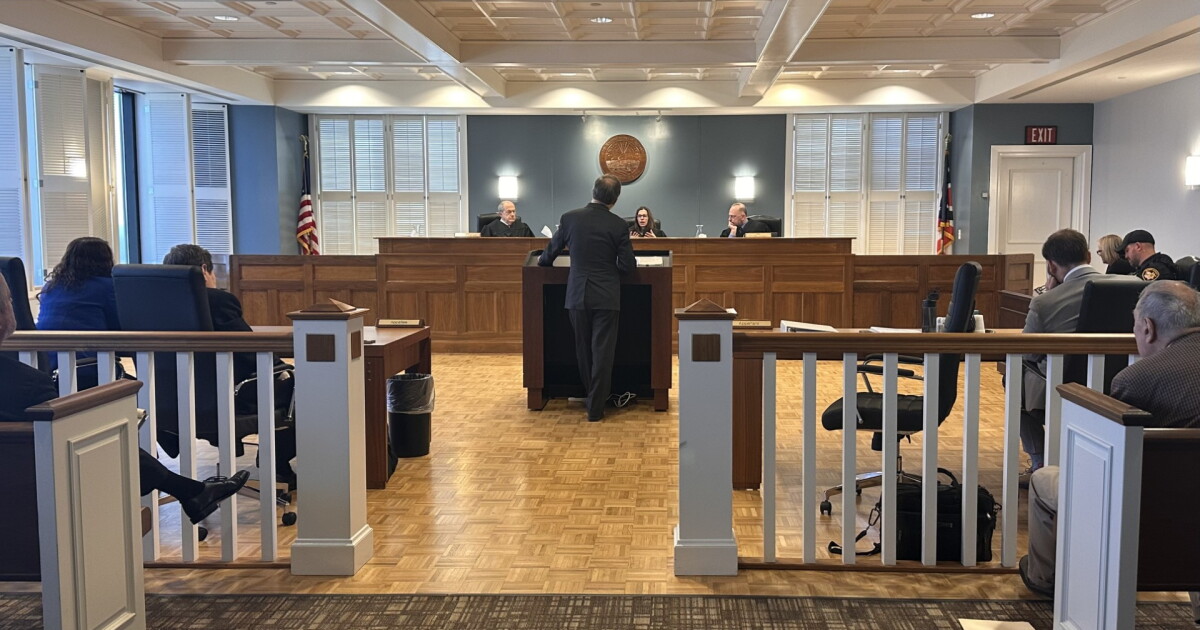
Ohio's Tenth District Court of Appeals has ruled that the state's EdChoice universal voucher program is unconstitutional. A Franklin County Common Pleas judge reached the same conclusion in 2022, but the program stayed in place while the case was appealed. Writing for a three-judge panel, Judge David J. Leland said the program funds a separate school system rather than the single public system the state constitution requires, lacks state oversight, and is unavailable to many rural residents who help pay for it. He also wrote that it draws money away from public schools and hurts their ability to win local levies. The ruling does not end the program for now. The article says a stay allows it to continue while the case moves to the Ohio Supreme Court, and the Ohio Attorney General is expected to appeal. About 180,000 students take part in EdChoice, which was expanded in 2023. Before then, vouchers were limited to students in certain low-income areas or those meeting other criteria. Reaction split along familiar lines. Voucher opponents, including groups representing teachers and public school advocates, called the decision a win for public schools and urged lawmakers to return to the Fair School Funding Plan. Supporters, including School Choice Ohio and the Ohio Christian Education Network, said they disagree and expect to prevail on appeal. House Speaker Matt Huffman said one appeals court's decision does not change earlier rulings that upheld school choice programs. The two major candidates for governor also responded, with Amy Acton stressing full funding of public schools and a spokesman for Vivek Ramaswamy saying he is confident the Supreme Court will resolve the issue.
AI-assisted from the publisher's article. It may contain errors.
Why it matters
The case affects the roughly 180,000 students using vouchers and the public schools whose funding and local levy prospects are at issue. Families, taxpayers and school boards may face changes depending on how the Ohio Supreme Court rules.
AI-assisted from the publisher's article. It may contain errors.
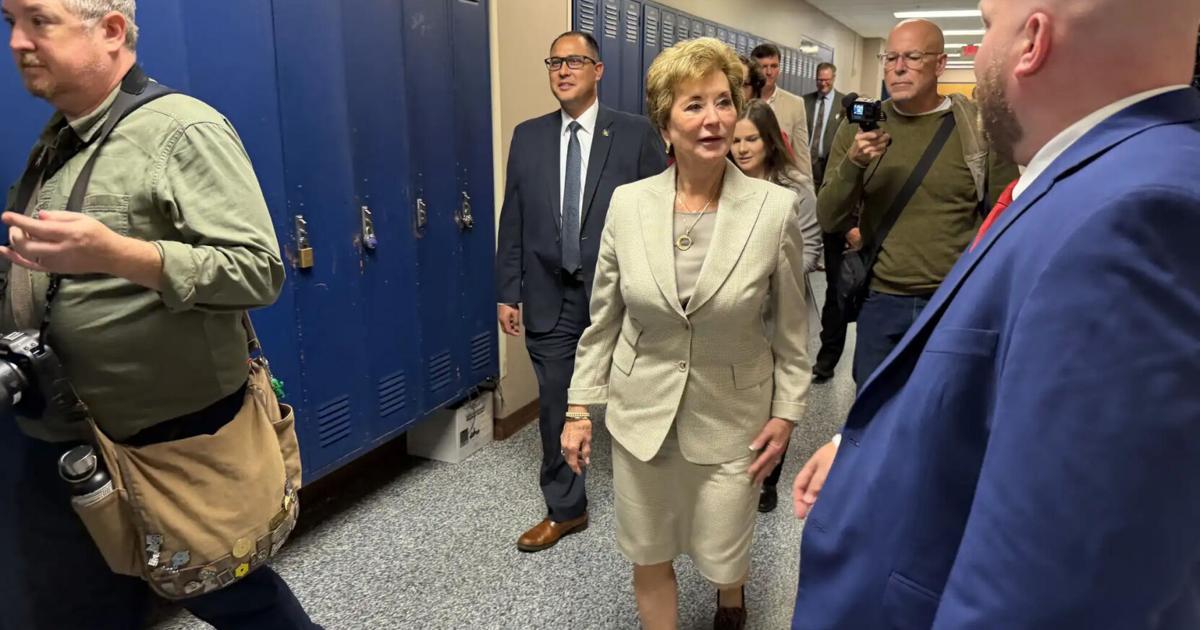
U.S. Education Secretary Linda McMahon stopped in Minnesota on Wednesday and defended her downsizing of the federal Department of Education. She visited Rochester Community and Technical College, Dakota County Technical College in Rosemount, and a charter school in Farmington. The stop is part of a nationwide trip meant to spotlight shifting authority over education to states. Minnesota was the 44th state she has visited, and she aims to gather ideas from local educators, families and students into a toolkit of best practices. The article says the department has lost nearly half its workforce and has moved more than 100 programs and obligations to other agencies, including special education services and Title I grant distribution. McMahon said other agencies already have systems and better technology for sending out funds, and she described the shift as going very well. However, the article cites an NPR investigation in which staffers said the department has become more complex, costly and inefficient, making it harder to serve states and schools. NPR also found that the student loan office needed to rehire after halving its staff. At the Rochester college she toured peace officer simulation, carpentry and automotive programs. She promoted vocational training as a way to address a shortage of skilled workers and urged technical colleges, high schools and employers to collaborate. The article also notes Republican Congressman Brad Finstad appeared with her while he faces a tight reelection race.
AI-assisted from the publisher's article. It may contain errors.
Why it matters
Federal moves of special education and Title I funding administration to other agencies could affect how money reaches schools serving low-income students and students with disabilities. Local leaders may also weigh the push for career and technical training in their own programs.
AI-assisted from the publisher's article. It may contain errors.
Cadence McShane Construction Company has started construction on a new Parkhill Middle School for Richardson Independent School District (RISD) in Dallas. The contractor is described as a longtime client relationship for the district. The new building is going up where the existing Parkhill Junior High School sits, at 16500 Shadybank Drive. The project is one piece of a districtwide effort by RISD to convert its remaining junior highs, which currently enroll seventh and eighth graders, into middle schools that also include sixth grade. The planned building has three stories and about 201,209 square feet. It is to include classrooms, shared learning areas, administrative offices, a library, a cafeteria, competition gyms and locker rooms. Construction will happen in multiple phases so the campus can keep operating while work continues. The contractor will also build outdoor facilities, including a track, a practice field, tennis courts and a courtyard plaza, which the article says are meant to serve students and the surrounding community. Stantec is the architect of record. The article says completion is expected in December 2028.
AI-assisted from the publisher's article. It may contain errors.
Why it matters
The project shows how one district is reshaping grade configurations while rebuilding a campus that stays in use. Families, staff and neighbors may be affected by phased construction on an occupied site, and the planned outdoor facilities are described as serving the wider community.
AI-assisted from the publisher's article. It may contain errors.
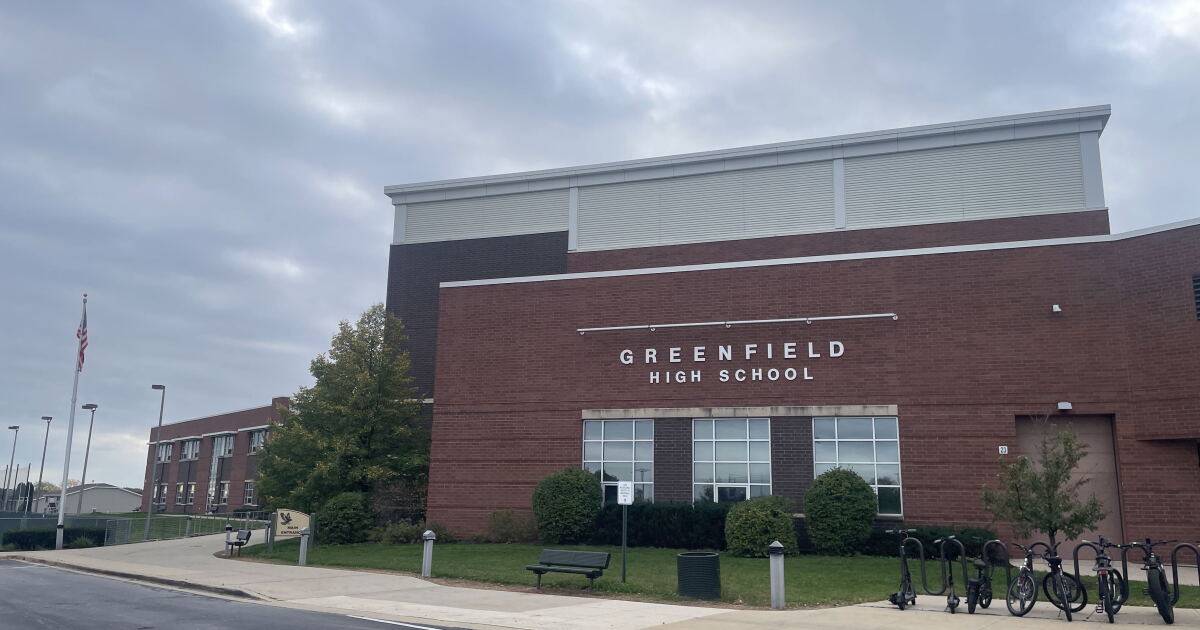
Voters in the Greenfield School District in Wisconsin will decide two separate referendum questions on the Nov. 3 ballot. Together they total $55 million, to be raised through property taxes. Early in-person absentee voting starts Oct. 20 at Greenfield City Hall, and all registered voters in Greenfield can take part. The first question is an operational referendum. It would let the district exceed its state revenue limit by $5 million a year for four years, starting in 2027-28, for $20 million overall. It would continue a referendum voters approved in 2022 that is expiring, so it would not raise tax rates further. The district and supporters say the money would help maintain class sizes, instructional programs, staff recruitment and retention, mental health supports, technology and transportation. The district says a no vote would bring a slight tax decrease, and it may have to consider cutting staff, raising class sizes, shrinking programs and replacing technology less often. The second question would authorize up to $35 million in bonds in one year for facilities work, including HVAC, electrical and ventilation systems, roofs, security cameras, fire doors and parking areas. It would set aside $3.5 million for the performing arts center, pool, tennis courts and track and field. It would add $9 in property taxes per $100,000 of property value. If it fails, the district says it would not take on these projects. The district enrolls about 3,300 students.
AI-assisted from the publisher's article. It may contain errors.
Why it matters
The votes affect local property tax bills and decide whether the district keeps current staffing and programs and funds building upgrades. The article places the measures within statewide referendum activity tied to state revenue limits that the district says have not kept pace with costs.
AI-assisted from the publisher's article. It may contain errors.
Two local school board presidents, Sonja Shaw of Chino Valley Unified and Richard Barrera of San Diego Unified, are the finalists for California state superintendent of public instruction. They advanced from a ten-person primary, beating three veteran Democratic legislators among others, and will meet in the nonpartisan general election on Nov. 3. Ballot counting was unfinished, with about 1.4 million ballots outstanding, but Shaw was ahead of Barrera in the tally at that point. According to the article, no one outside the state legislature has won the job since 1982. The two disagree on several issues. Shaw opposes state rules that let transgender students join girls sports teams and rules that bar districts from requiring staff to tell parents about a student's gender identity or orientation. She says the state should not spend more overall but should get more money into classrooms, and she is critical of ethnic studies. Barrera supports the state policies, wants more school funding, and backs ethnic studies. He says he would enforce civil rights protections for LGBTQ+ students in every district. The governor's office says fewer than 10 transgender athletes played K-12 sports last year among nearly 6 million students. Both candidates cite test score gains and above-average graduation rates in their districts. A California Teachers Association committee put $5 million toward Barrera's campaign, while Shaw reported raising $165,000 this year. A Democratic consultant quoted in the article expects a highly partisan contest.
AI-assisted from the publisher's article. It may contain errors.
Why it matters
The state superintendent leads the California Department of Education, so the winner will influence policy on funding, student rights and curriculum affecting families and staff statewide. The article shows the candidates hold sharply different positions on those issues.
AI-assisted from the publisher's article. It may contain errors.
The Charles County Board of Education recognized five Charles County Public Schools employees at its Oct. 13 meeting, according to a district announcement reported by the SoMD Chronicle. Principals introduced each honoree to the board. The board also recognized five students at the same meeting. Two honorees are special education teachers. One, at J.P. Ryon Elementary, has led her school's special education team for three years, recently earned National Board Certification and is pursuing a doctorate. The other, at William A. Diggs Elementary, moved from second grade into special education, where she co-teaches, provides interventions, helps build individualized student schedules and oversees the school's behavior support program while working on a master's degree. Two instructional assistants were also honored. One works at Glymont Middle School, supporting athletics, extracurriculars and several volunteer programs. The other works at the F.B. Gwynn Educational Center and was recognized for small-group and one-on-one instruction and careful handling of confidential student information. The fifth honoree is a building service worker at Thomas Stone High School who maintains campus cleanliness and sanitation practices and is often first to respond to unexpected incidents. Principals praised each employee's contributions.
AI-assisted from the publisher's article. It may contain errors.
Why it matters
Public recognition at board meetings highlights roles that families may not often see, including special education staff, instructional assistants and building service workers. It shows what the district says it values in employees who support students day to day.
AI-assisted from the publisher's article. It may contain errors.
Voters in Whitefish Bay, Wisconsin, will decide on Nov. 3 whether the school district can borrow up to $90 million through general obligation bonds. The money would rebuild the middle school on its current campus, pay for capital maintenance and infrastructure work at the high school, and update fire protection and alarm systems at the high school and both elementary schools. The district enrolls 2,861 students in four schools. This is the district's second attempt this year. In April, voters turned down a $135 million proposal that would have put a new middle school slightly south of the existing site; it fell about 300 votes short. According to the article, some opponents objected to building on land that holds a veterans' memorial, and others opposed the tax increase of $260 per $100,000 of home value. The new plan keeps the middle school where it is and would raise taxes by $125 per $100,000. For the average home, valued at $685,800, that works out to $857 next year. The school board unanimously put the question on the ballot on Aug. 19. The district and supporters say the century-old buildings have systems at the end of their useful lives. Critics argue the tax hike would add to cost-of-living pressures, especially for seniors on fixed incomes. The district says that if funding is not approved, repair costs could force cuts to programs within five to 10 years. All registered village voters can vote, and in-person absentee voting begins Oct. 20 at Village Hall.
AI-assisted from the publisher's article. It may contain errors.
Why it matters
The vote affects property tax bills for homeowners and decides how the district will pay for aging buildings. It also shows how districts in Wisconsin, which face state limits on revenue, return to voters after a failed referendum.
AI-assisted from the publisher's article. It may contain errors.
The Hillsdale Collegian reports on chronic absenteeism in Hillsdale schools. A student counts as chronically absent after missing 10% or more of the school year, which the U.S. Department of Education says is roughly 18 days in a 180-day year. Michigan's public education data portal shows that 20.8% of Hillsdale public school students, or 1,050 students, met that definition in 2025–26. The statewide rate that year was 27.2%. Hillsdale's rate has dropped since the pandemic. It was 32.1% in 2021–22, then 22.4%, 23%, 20.7%, and 20.8% in the most recent year. Michigan's rate fell from 38.5% to 30.8%, 29.5%, 27.9%, and then 27.2%. The highest Hillsdale figure on record is 33.9% in 2012–13, or 2,207 students. The average was 21.5% for 2012–13 through 2018–19 and 23.4% for 2019–20 through 2025–26. The article notes that attendance has improved while test scores have not. It says 38.2% of Michigan third graders were proficient in English Language Arts on the latest state test, the lowest in the test's 12-year history. It also says enrollment in Hillsdale is shrinking. Hillsdale Preparatory School closed earlier this year after nearly 25 years, and school officials attributed that to a falling county population. The Census estimates that population is down 0.4% since 2020.
AI-assisted from the publisher's article. It may contain errors.
Why it matters
Missing school is tied to a student's time in class, and the article shows Hillsdale doing better than the state average yet still seeing about one in five students chronically absent. It also links attendance to declining test scores and shrinking enrollment, which affect families, staff and school planning.
AI-assisted from the publisher's article. It may contain errors.
Joy Jiandani, who works as a child behavior educator and is a PTA leader, has begun running for one of the countywide seats on the Fairfax County School Board. She lives in Springfield. Annandale Today reports she is expected to meet strong competition in a Democratic primary next spring. All school board members and county supervisors face voters in 2027, and the article says the three current at-large members, Ryan McElveen, Ilryong Moon and Kyle McDaniel, have not said whether they will seek another term. According to her campaign website, Jiandani grew up in Queens with a single mother and was the first in her family to finish high school and college. She holds a master's degree in bilingual special education from George Washington University. She has taught in Washington, D.C., Prince George's County and Alexandria, and she started a behavioral health practice in 2020. She says schools should give every student fair access to opportunities, resources and individualized support. She questions the district's recent $623,000 purchase of a quantum computer for Skyview High School given talk of budget limits and larger classes. She opposes assigning teachers to metal detector screening at some high schools, saying it harms trust with students. At an Oct. 9 hearing on a proposed Dominion Energy/NextEra merger, she said schools need dependable, affordable power, citing more than 1,400 power interruptions for district students since July 2025. The article says state Sens. Stella Pekarsky and Carroll Foy have endorsed her.
AI-assisted from the publisher's article. It may contain errors.
Why it matters
Countywide school board seats shape budget priorities, school safety practices and support for students across Fairfax County. An early look at a candidate's background and stated positions gives voters time to weigh the issues before the 2027 elections.
AI-assisted from the publisher's article. It may contain errors.
The union that represents roughly 230 professional staff in the Hollidaysburg Area School District says its members will cast ballots on Monday afternoon about a possible strike. The Hollidaysburg Area Education Association announced the vote on Thursday. If members approve, the union's bargaining team would have the power to set a walkout date should one become necessary. According to the union, it has had no bargaining session with district negotiators since it gave them a proposal on Sept. 1, and as of Oct. 15 it had not been given a counterproposal. The union says the two sides have met more than 10 times since January, but that talks have stalled. It accuses the district's negotiators of presenting take-it-or-leave-it offers and of being unwilling to address educators' concerns. One concern it cites is that the district's starting salary is well below those of neighboring districts. The article does not include a response from the district. Two teachers who belong to the union were quoted. One said staff, including members of the bargaining team, have weighed leaving the district for better pay, and that students are affected when teachers depart. The other said the proposals received so far would move the contract backward and accused the district of delays. According to the union, no bargaining dates are currently scheduled.
AI-assisted from the publisher's article. It may contain errors.
Why it matters
A strike authorization vote signals that contract talks affecting about 230 educators are at a critical point, which could affect classroom staffing and school operations. Families and board members may want to follow how the district responds, particularly on starting pay compared with nearby districts.
AI-assisted from the publisher's article. It may contain errors.
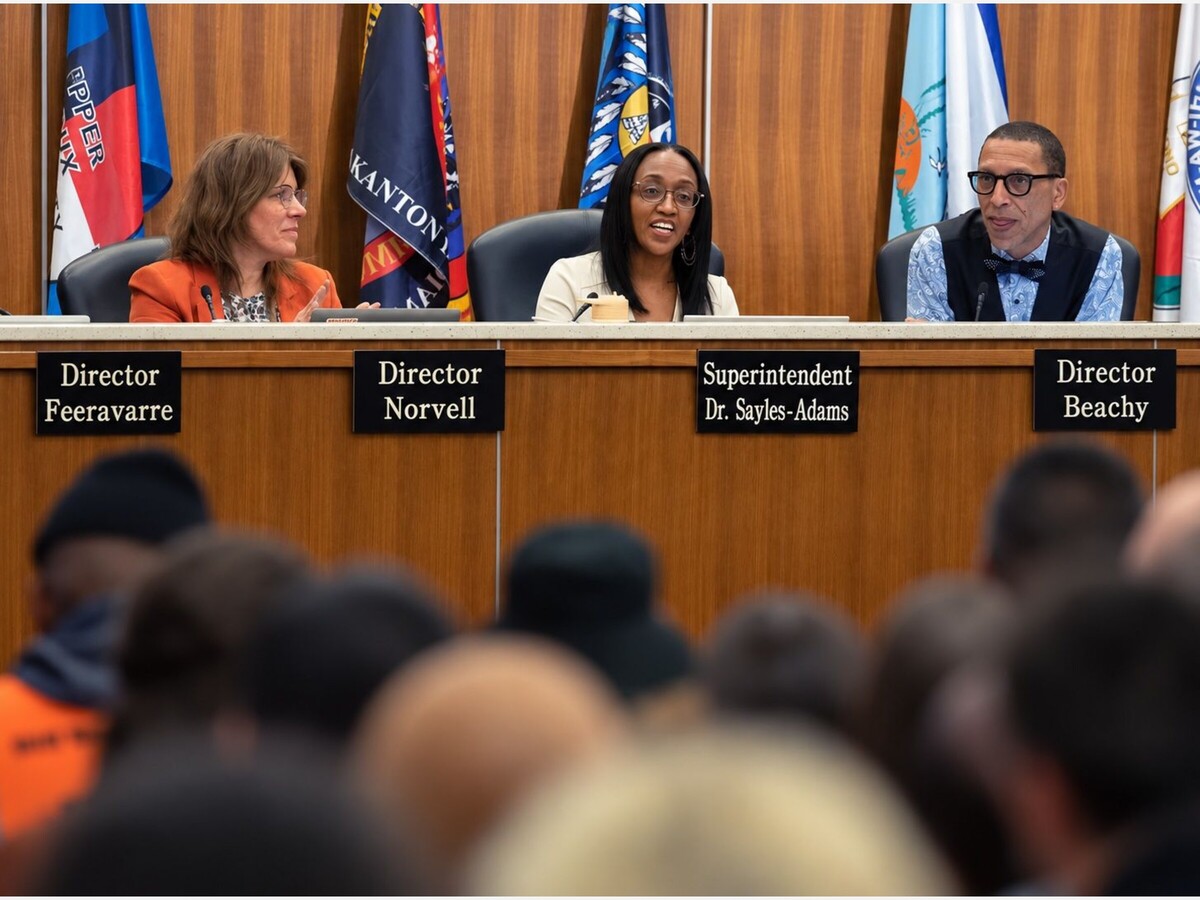
The Minneapolis Board of Education voted unanimously on October 13 to stop a plan that could have closed or consolidated as many as 16 schools for the 2027–28 school year. Superintendent Lisa Sayles-Adams recommended the change at the start of the meeting, saying the district had heard strong opposition from residents. Attendees applauded. The reversal followed a September 15 presentation of three restructuring scenarios, which families, teachers and the Minneapolis Federation of Educators opposed. The district says it has more building capacity than its enrollment needs. The Minnesota Reformer reported more than 12,000 empty seats, and Axios reported that over two-thirds of buildings operate below 70 percent capacity. Critics questioned why some schools were targeted. Axios reported that one elementary school was about 80 percent full but was considered because its enrollment of about 315 was below the elementary average of roughly 374. A deputy superintendent said larger enrollments can help schools keep staffing and programs steady. The Star Tribune reported that district leaders estimated the options would save only about $720,000 to $2.3 million in fiscal year 2028. District budget materials list a projected $50.5 million gap for fiscal year 2027. The board's action points to alternatives, including raising enrollment, expanding early childhood programs, reviewing school start and end times, reconsidering student assignment policies, and examining needs-based funding. The article says the next major test will be the district's budget process, and that questions about future building use remain open.
AI-assisted from the publisher's article. It may contain errors.
Why it matters
Families with children in the affected schools avoid reassignment for 2027–28, but the article says the district's enrollment and budget pressures remain. Taxpayers, staff and board members can expect continued debate over how to balance costs, building use and school quality.
AI-assisted from the publisher's article. It may contain errors.
Parents in the Forest Lake Area School District are raising concerns after students in several grade levels, including some high school seniors who are or will be 18 by Election Day, were shown a three-minute video during the district's Indigenous Peoples' Day observance on Oct. 12. The KARE 11-produced segment features Minnesota Lt. Gov. Peggy Flanagan, the DFL candidate in the Nov. 3 U.S. Senate race against Republican Michele Tafoya. The article says the video was filmed years before her campaign began. In it, she discusses her Native American heritage and criticizes the traditional Columbus narrative. School board president Curt Rebelein told Alpha News he has received many complaints from parents and considers the video inappropriate. He said the opposing candidate was not represented. According to him, teachers developed the materials, which were apparently approved under the previous superintendent, and students have seen the video before without parent complaints. A critic, Cristine Trooien of the Minnesota Partnership for Achievement, argues the video violates district policy and implies an endorsement. Alpha News reports the district did not respond to its request for comment. Rebelein said he and another board member met with Superintendent John-Paul Jacobson, who plans to review the video and create a process for reviewing materials that would screen out political figures who are up for election. Rebelein would only commit to a review, not to removing the video. State law requires at least one hour of observance when schools hold classes on the day, and schools choose their own materials.
AI-assisted from the publisher's article. It may contain errors.
Why it matters
The dispute raises questions about how districts choose classroom materials and how they handle content featuring active political candidates, especially near an election. It also shows how a board and superintendent may respond to parent complaints with new review procedures.
AI-assisted from the publisher's article. It may contain errors.
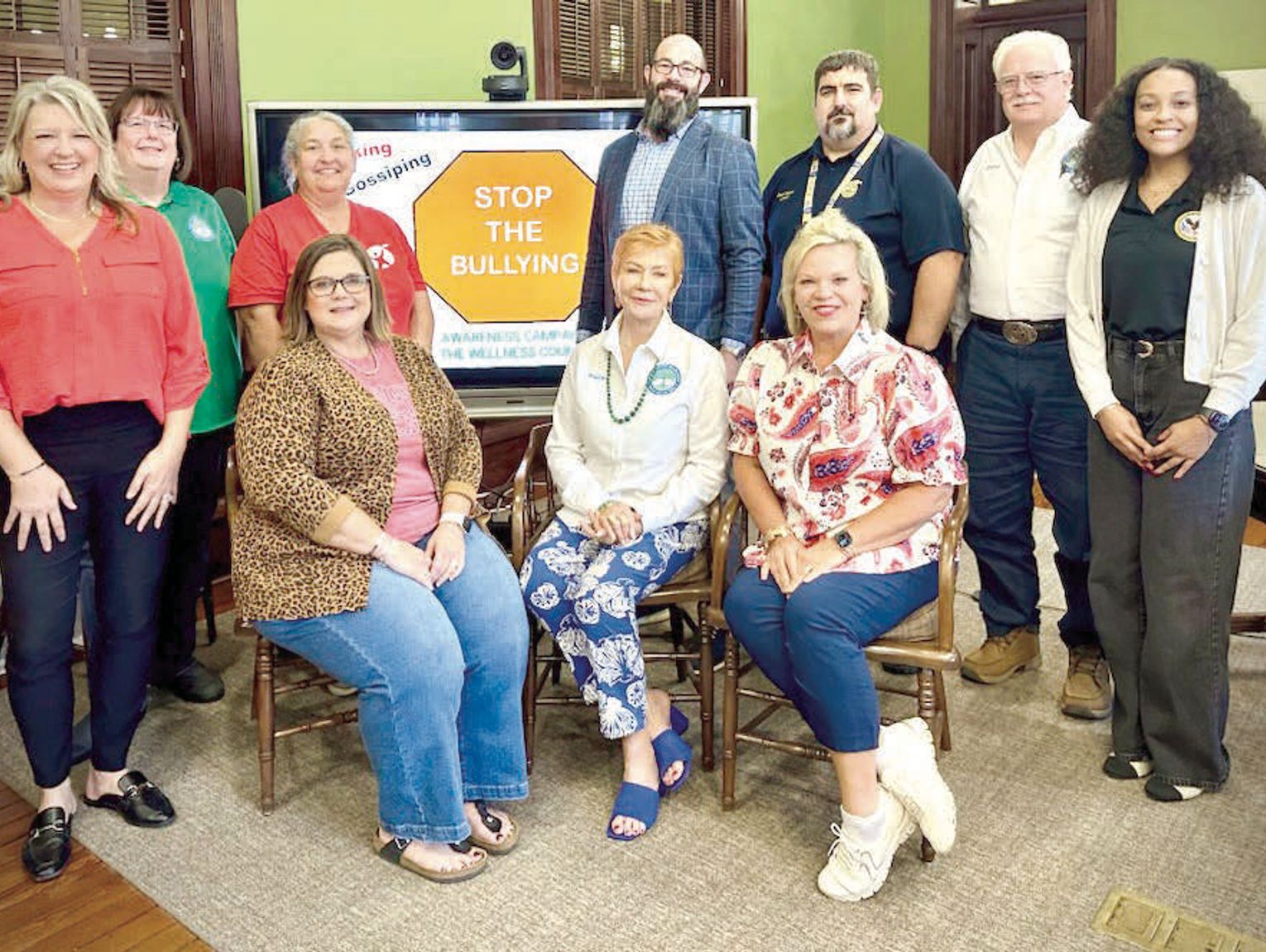
The Colorado County Wellness Council focused its October meeting on bullying prevention, tying it to National Bullying Prevention Month. Representatives from three local school districts took part. The speakers were the Columbus ISD superintendent, a Rice ISD teacher who sits on that district's school safety committee, and a Weimar ISD counselor. The speakers explained how their districts handle bullying, including how reports are made, how cases are looked into, and how they are resolved. The discussion also covered David's Law, a Texas statute from 2017 that pushes districts to set up clear steps for reporting and responding to bullying, including online bullying. The article says each district has its own procedures but that the speakers share a goal of building respectful school cultures. It also says preventing bullying takes parents, teachers, students and the wider community, not only educators. The meeting also kicked off the council's Stop Bullying Art Contest. More than 500 students from kindergarten through 12th grade have sent in artwork about kindness, acceptance, friendship, respect and speaking up against bullying. The council invites the public to a reception honoring contest winners on the evening of Thursday, October 22, at the Live Oak Art Center in Columbus.
AI-assisted from the publisher's article. It may contain errors.
Why it matters
Bullying policies differ by district, so families can benefit from knowing how each one takes reports and responds. The article shows local schools and community groups coordinating on prevention under a state law, and it points to a public event where residents can take part.
AI-assisted from the publisher's article. It may contain errors.
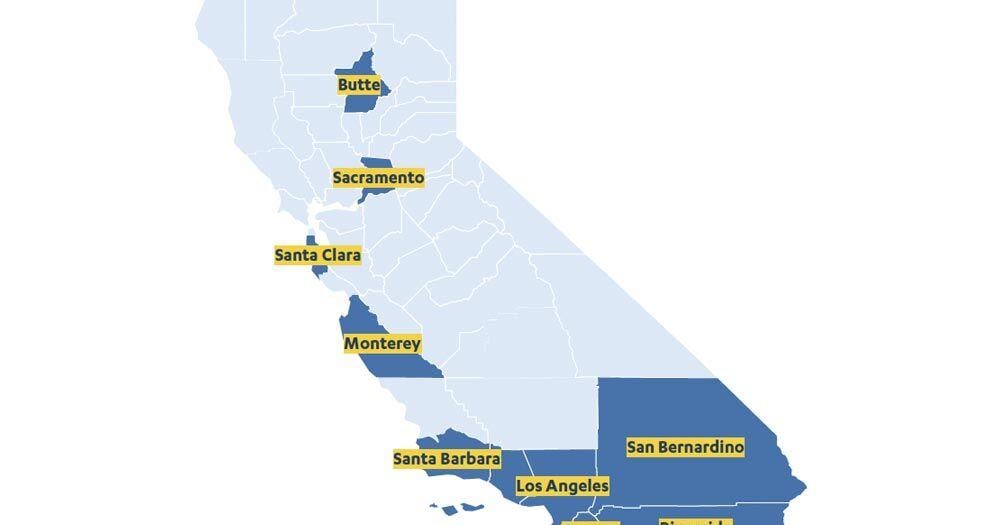
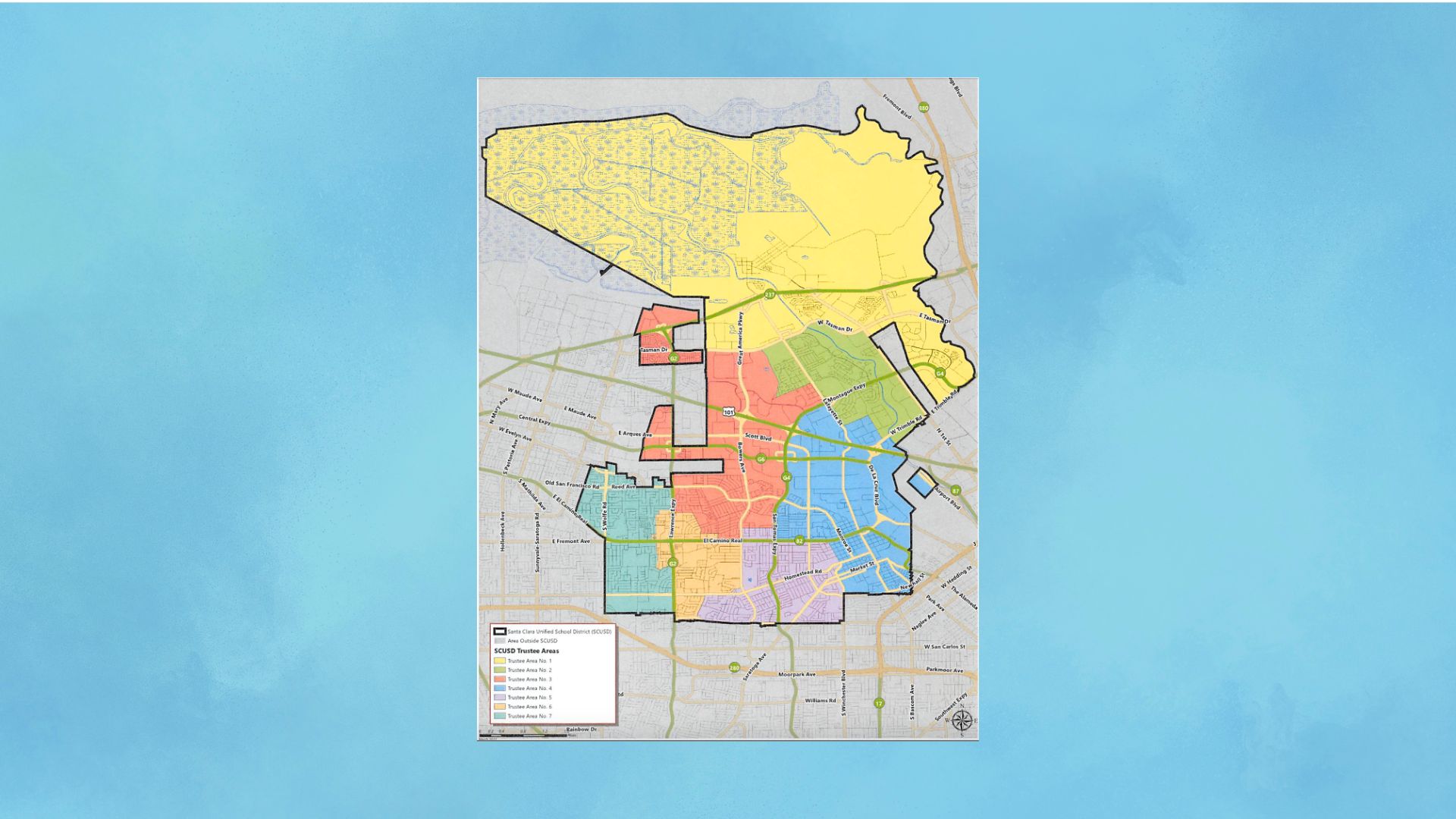
Santa Clara Unified School District trustees voted unanimously on Oct. 8 to certify results for three board candidates who had no opponents. All three are sitting trustees: Vickie Fairchild, Jodi Muirhead and Andrew Ratermann. The article describes the vote as procedural. California Education Code requires the county to cancel school board elections that have only one candidate and appoint that person instead. The county could not say how much money this saves. One board race is still on the ballot, for Trustee Area 1. Incumbent Jim Canova faces Kamal Yassin, a software developer, in what the article describes as Canova's first contested race in more than a decade. Yassin says he wants residents involved earlier in board decisions as the district deals with falling property tax revenue, and he says layoffs should be a last resort. The district's teacher union endorses him. Canova has endorsements from Rep. Ro Khanna and Assembly Member Alex Lee and points to his part in creating the Don Callejon Arts and Design School. The board also voted 5-2 to keep moving forward with a new building for New Valley High School, an alternative school, on the Wilson Educational Options campus. Canova and Muirhead opposed it and wanted to consider using Kathleen MacDonald High School, which has 305 open seats this year. Trustee Michele Ryan argued further delay was unfair to students. A former trustee questioned the project's efficiency given declining enrollment. The district expects the building to open in 2029.
AI-assisted from the publisher's article. It may contain errors.
Why it matters
Uncontested seats mean voters in much of the district will not choose among candidates this November. The New Valley decision shows how the board is weighing bond-funded construction against declining enrollment and empty seats at other campuses.
AI-assisted from the publisher's article. It may contain errors.
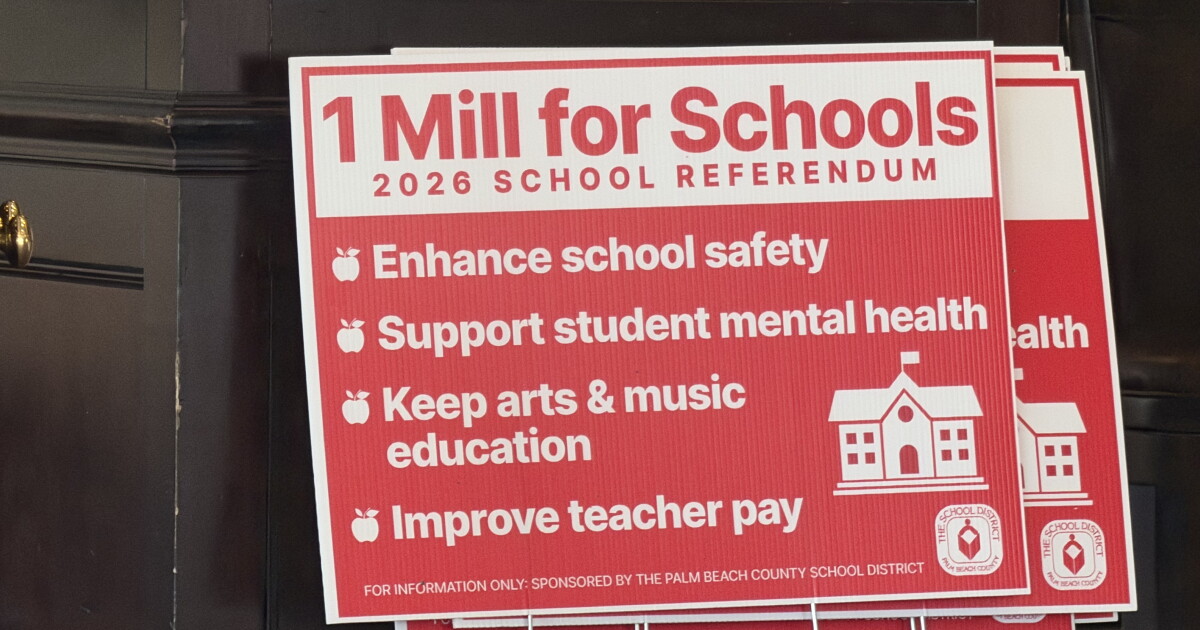
Voters in Miami-Dade, Broward and Palm Beach counties will decide on Nov. 3 whether to renew a local one-mill property tax that supports school operations. Voters first approved it in 2018 and renewed it in 2022, and state law requires a renewal vote every four years. Education leaders say they worry some voters may mix it up with Amendment 3, a separate ballot measure that would lower property taxes used for public services. District officials describe large stakes. Miami-Dade estimates a loss of about $500 million against a $7.4 billion budget, and says average teacher pay could fall from $73,030 to $57,814. Broward says it would lose roughly $358 million a year starting in 2027-28, with nearly 90% of the money going to pay supplements for teachers and other eligible staff, plus mental health and safety staff. Palm Beach reports the levy raised $361.4 million in fiscal 2026, and its superintendent warns that about 900 teachers in school choice programs would lose jobs and pay would drop $8,000 a year. A February poll of 500 likely voters, which the Partnership for Miami commissioned, found 66% support, though 56% said the district should look for operating savings instead. Florida law bars officials from urging a particular vote, so districts say they are only providing information. The Broward teachers' union president says she is confident of strong support.
AI-assisted from the publisher's article. It may contain errors.
Why it matters
The levy funds teacher pay supplements, mental health staff and school safety personnel in three of the nation's largest districts. The outcome could affect staffing, budgets and taxes for families and homeowners across South Florida.
AI-assisted from the publisher's article. It may contain errors.
Voters in the Milaca School District will choose among seven candidates in the general election on Tuesday, Nov. 3. Three four-year seats are up for election, and a separate special election will fill one seat for a two-year term. Six candidates are running for the four-year seats: Steve Bistrup, Jennifer Corrow, Sara Grieser, Sara Herr Larson, Kayla Moeller and Joshua Hurt. Corrow, Grieser and Herr Larson are incumbents. Incumbent Jere L. Day is the candidate named for the special election seat. The local newspaper, the Union-Times, gave all candidates the same questions about why they are running, what key issues they see and what their priorities would be. Answers are printed in the candidates' own words, lightly edited, and the paper notes that the views and factual claims belong to the candidates. In the text provided, the answers are not labeled with candidate names. The candidates describe a range of backgrounds, including current and former board members, a retired district technology director, nurses, a small business owner and a retired teacher. Declining enrollment and its effect on school funding come up in many of the answers. Other themes include fiscal responsibility, more community involvement and clearer communication, smaller class sizes, student achievement and test scores, and staff support. One answer calls the school funding model outdated and criticizes reliance on property taxes. The article does not describe any other election details.
AI-assisted from the publisher's article. It may contain errors.
Why it matters
The people elected will help set budgets and priorities for the district. Many candidates say falling enrollment is cutting into funding, which can affect staffing, programs and class sizes. The profiles let voters compare candidates' stated views before voting.
AI-assisted from the publisher's article. It may contain errors.
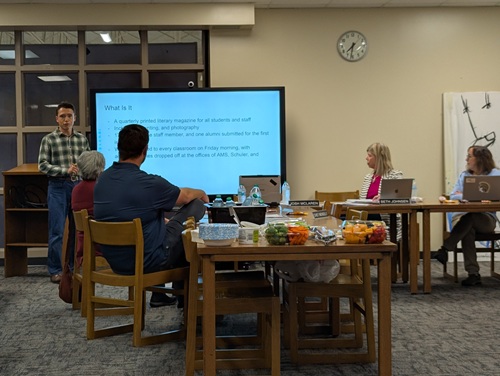
The Atlantic School Board met briefly on Wednesday evening ahead of its board retreat. A journalism student told members about The Lance, a new printed literary magazine due out this Friday. According to the student, it will carry student art, photography, writing and other creative pieces, and a new issue will come out every quarter. The student said the idea came from attending the Iowa Summer Journalism Workshop. The Booster Club is paying for the publication. The board also got a short progress report from SVPA and DCI on design development for work funded by the $22.5 million bond referendum that voters passed in November 2025. The work covers two elementary schools, the middle school and the high school. Because of limited time, the firms asked to return next week to walk the board through the schematic design and cost estimates. The board approved several action items. These include student trips to Costa Rica in summer 2028 and to the National FFA Leadership Conference in Indianapolis from October 20 to 23. Members also approved buying a 2027 Ford Transit passenger van under a state bid arrangement, plus agreements tied to an Iowa local government risk pool for the 2027 fiscal year. The article also lists several staff and coaching positions without further detail.
AI-assisted from the publisher's article. It may contain errors.
Why it matters
The update shows how a voter-approved bond is moving toward concrete designs and cost figures for four school buildings. The meeting also shows how a board handles student programs, travel, vehicle purchases and risk coverage, all of which involve district resources and community support.
AI-assisted from the publisher's article. It may contain errors.
The Trenton R-9 Board of Education met on Oct. 14 and adopted policy and procedure updates recommended by the Missouri School Boards Association. The changes cover the superintendent's responsibilities, evaluations of administrators and staff, professional development, and staff organizations. Superintendent Daniel Gott said most revisions involved wording or requirements tied to the Missouri School Improvement Plan, and that the district already follows many of the practices. The board also heard several reports. The district safety coordinator described two emergency drills held Sept. 26 and Oct. 2, and a three-level color system (green, yellow, red) for communicating safety conditions. The special services director said 173 students receive special education services and 50 are being evaluated for eligibility. Staff outlined testing plans, including the ASVAB on Nov. 4 for juniors and seniors. The food service report showed 5,237 breakfasts and 15,640 lunches served in September, with participation up from last year. High school enrollment was reported at 331 students. Gott also relayed that a state task force studying the school funding formula must send recommendations to the governor by Dec. 1, and that new A-through-F school report cards are expected in November. After a closed session on personnel and student matters, the board announced coaching hires for middle school basketball and wrestling and a high school assistant wrestling position.
AI-assisted from the publisher's article. It may contain errors.
Why it matters
The meeting shows how a small district handles routine governance, emergency planning, and student services while tracking possible state funding changes and new school report cards. These items may affect families, staff, and local budgets.
AI-assisted from the publisher's article. It may contain errors.
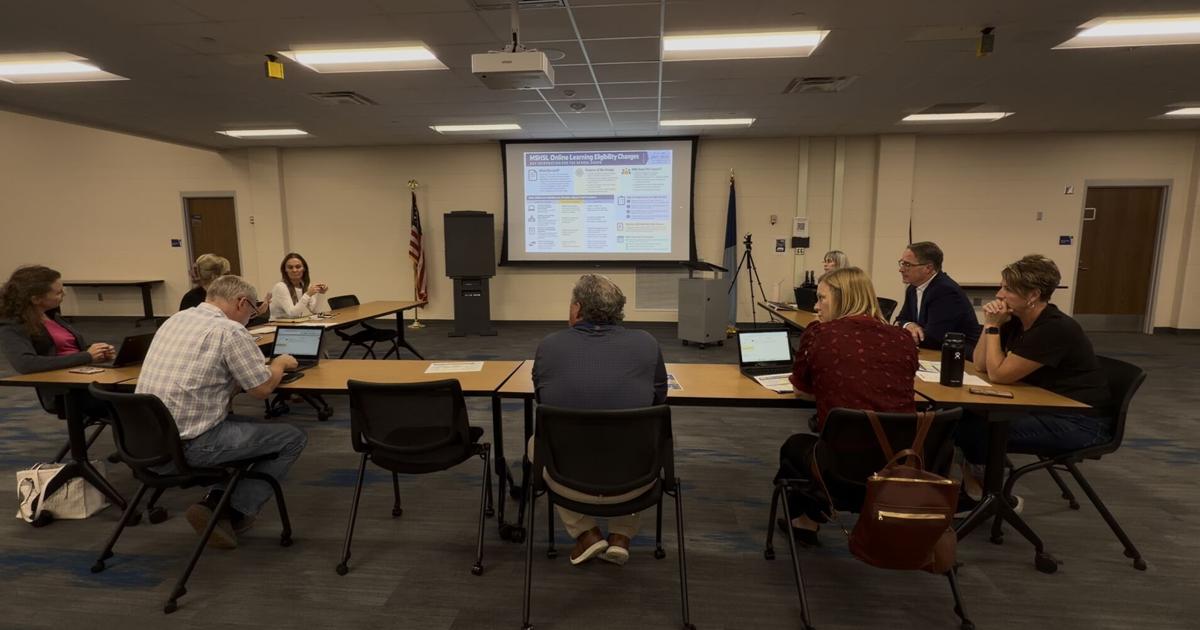
At a Monday work session, the Owatonna School Board heard about an upcoming Minnesota State High School League (MSHSL) policy on extracurricular eligibility for online students in grades nine through 12. An ad hoc committee was appointed by the MSHSL Board of Directors during the 2025-26 school year, and the board has since approved its proposal. The policy starts in 2027-28 and is meant to answer eligibility questions and widen access for fully online students. Under the change, transfer rules for varsity athletes still apply. Students in districts with a superintendent's agreement can take part in activities even if they are enrolled academically elsewhere. A student enrolled in an online program run by a school that has no such agreement with their home district would not be eligible. Students already participating before the change would be grandfathered in. The article gives an example: a Byron resident enrolled in Owatonna's online program could join Byron activities because the two districts have an agreement. The article says these agreements can also split funding between the online school and the school where the student is eligible, such as 60/40 or 50/50. The superintendent said one unnamed school left its agreement, and affected students enrolled in Owatonna's online program, leaving them eligible only for Owatonna activities and Owatonna receiving all the funding. Owatonna currently has agreements with 16 districts, and the superintendent said the list is fluid. It is unclear whether the MSHSL will audit the agreements.
AI-assisted from the publisher's article. It may contain errors.
Why it matters
Families with students in online programs may find their eligibility for school activities depends on whether their districts have signed an agreement. The agreements also affect how per-student funding is divided between districts, which matters to board members and taxpayers.
AI-assisted from the publisher's article. It may contain errors.
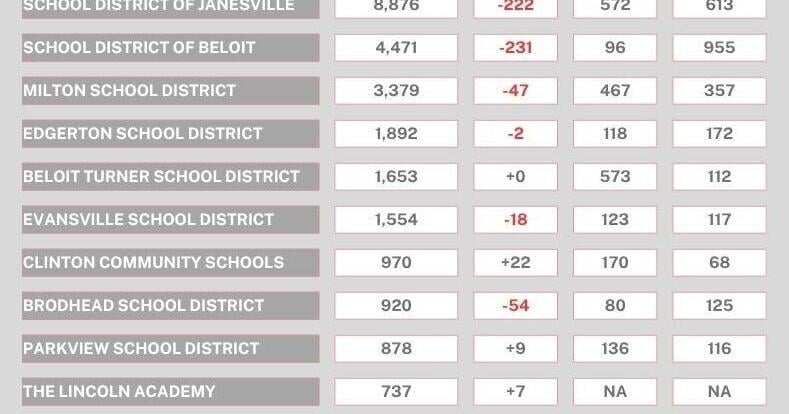
Enrollment fell this fall in the two biggest school districts in Rock County, Wisconsin, according to the Beloit Daily News. The School District of Beloit told the state its official count was 4,471 students, a drop of 231, or 4.9%, from the prior year. Janesville reported 8,876 students, down 222, or 2.4%. Milton, the county's third-largest district, also declined, by 47 students. Districts report counts to the state's education department each September, and the state uses them to calculate school funding. The article says Beloit's enrollment has been falling since 2014, when it was 7,488. It lists several causes: competition from other schools, use of the state voucher program at private schools that reported gains, and falling birthrates. It calls the state's open enrollment system a major and growing factor. This year 955 students left Beloit for other districts and 86 came in, a net loss of 869. The article's archive figures show the net loss was 109 in 2004 and 718 in 2020. The board president says the board's broader aim is improving academic achievement, including attendance, behavior and staff retention. The board and administration are preparing for further declines. A public charter school, Lincoln Academy, has 737 students and is expanding to eventually double its capacity. Earlier this month, long-range talks began on school configurations that could involve closing as many as five schools. The district has already closed and sold several buildings and is selling another.
AI-assisted from the publisher's article. It may contain errors.
Why it matters
Enrollment affects the state funding a district receives and can shape decisions about staffing and buildings. For Beloit families and staff, the article ties continued declines to discussions that could lead to as many as five school closures.
AI-assisted from the publisher's article. It may contain errors.
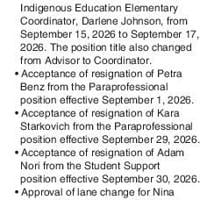
The Rock Ridge School Board, which governs Independent School District 2909 in Virginia, Minnesota, held a regular meeting on September 28, 2026. Six members attended and one was absent. The meeting ran about an hour. The board unanimously approved a consent agenda of routine items: paraprofessional and care-staff hires, extra-duty stipends, volunteer coaches, resignations, a $12,449 grant routed through the Rock Ridge Education Fund, and school-supply donations from two churches. The board heard updates from the Eveleth mayor on plans for the former school site there, from the special education director on the first month of the Life & Learning Center, and from the high school principal on PSEO and CIS enrollment. The superintendent said construction of a greenhouse has begun. After discussing a possible four-day school week, the board agreed to form committees and invite interested people to study what a transition might involve. On administration items, the board voted unanimously to certify the 2026 payable 2027 levy at its maximum and set a December 14, 2026 Truth in Taxation meeting. It approved two Northland Foundation subcontracts on early childhood and child care provider support, plus wrestling and alpine ski co-ops. It also shortened one student-athlete's suspension from nine games to six, citing exceptional circumstances, and approved two elementary teaching positions.
AI-assisted from the publisher's article. It may contain errors.
Why it matters
The votes touch taxes, class sizes, staffing, and a possible shift to a four-day week. Families and taxpayers can see how the levy was set, and a public Truth in Taxation meeting is scheduled for December.
AI-assisted from the publisher's article. It may contain errors.
The Youngstown City School District met nine of the 24 benchmarks on last year's state report card, short of half. Superintendent Jeremy Batchelor argues the district nonetheless met state standards and that this should be enough to end its academic distress designation. He told reporters after Tuesday's board meeting that the district has made double-digit gains in many areas. Batchelor said he recently sent Gov. Mike DeWine a request that included the district's annual Academic Improvement Plan report, along with a request for a one-year extension on the plan's requirements. He said Ohio House Bill 110 makes this the last year such an extension is available. That 2021 law paused the creation of new academic distress commissions and set a path for Youngstown, East Cleveland and Lorain to be released. The latter two have been released, leaving Youngstown as the only district with the designation. Batchelor said he wants the board to eventually testify before the General Assembly on the issue. Board member Kenneth Donaldson said he finds it unfair that the other two districts were released with lower benchmarks. The district earned three stars on the report card released Sept. 15, but Batchelor said past reputation still hampers student recruitment. Board member Joseph Meranto reported that Choffin Career & Technical Center earned five stars for the third straight year and is exploring partnerships with Youngstown State University.
AI-assisted from the publisher's article. It may contain errors.
Why it matters
Academic distress status brings state oversight and, according to the superintendent, affects how the district is perceived and how easily it attracts students. The outcome of the extension request and any legislative action will shape how the district is governed going forward.
AI-assisted from the publisher's article. It may contain errors.
The Webb City R-7 School Board voted at its October meeting to begin preparing for as many as two ballot questions in April. One would raise operating revenue by an amount not yet set. The other would be a bond issue that the district says would not raise taxes, drawing on its existing borrowing capacity. The bond question relates to a facilities goal the board has discussed for several years: a better setup for third and fourth graders, who are now divided between Eugene Field and Mark Twain elementary schools. Superintendent Brenten Byrd won approval to seek qualifications from architects, who could propose either a new school or an expansion of Mark Twain to house both grades and include a tornado shelter. Byrd had only asked to talk further with architects, and the board went further by voting to prepare for the April election. Byrd demonstrated a new spreadsheet tool that projects fund balances using local tax revenue, state funding and wages. He said that if nothing changes, the reserve would run out after four years. He said the aim is to avoid cutting staff and programs. He also said the outlook for more state aid is weak, and that a slight enrollment decline since COVID cost the district $800,000 in state funding this year. Byrd plans to invite architects and financial advisors to the Nov. 10 meeting and said the board needs to make final decisions then.
AI-assisted from the publisher's article. It may contain errors.
Why it matters
Families and taxpayers could be asked in April to vote on a higher operating levy and a bond issue tied to new or expanded space for grades three and four. The district says reserves could run out in four years without added revenue.
AI-assisted from the publisher's article. It may contain errors.
Mark Gross, superintendent of the Mars Area School District in Adams Township, will retire on June 30, 2027. That date will end a career of nearly 37 years. The article says the timing gives the school board room to find a successor. At an Oct. 6 work session, board members voted unanimously to approve a $14,000 agreement to run a search for a new superintendent. Gross says his five-year contract was originally set to end in 2025. He says it was extended two years after the board asked him to stay and guide the district through ongoing expansion projects. He says the aim is to have a replacement hired while he is still in the district so he can help with the handoff. He plans to stay out of the selection process. Gross called his time in the district positive. He started during the COVID-19 pandemic, which he described as stressful. He says the district used a hybrid model called Live-Stream Interactive, in which students attended school but could choose to learn from home. He says the approach was unpopular at first, with some people worried about health and others favoring open schools. He expects the growing district to attract strong candidates and says he is retiring to pursue personal interests.
AI-assisted from the publisher's article. It may contain errors.
Why it matters
A superintendent change affects district direction, especially while expansion projects are still underway. Families, staff and taxpayers may want to follow how the board runs the paid search and how it plans the handoff before Gross leaves.
AI-assisted from the publisher's article. It may contain errors.